California Airport Alert: Why San Jose Heat Pumps Are Becoming the Smart Choice for Year-Round Comfort

Airport News for Heat Pumps San Jose

California’s airports have long represented innovation, movement, and economic growth. Today, they also reflect the state’s broader commitment to energy efficiency, electrification, and environmentally responsible development. From upgraded terminals to electric ground equipment, airports are adopting technologies designed to lower energy use while keeping passengers and employees comfortable.

That shift toward smarter electric technology is not limited to aviation facilities. Homeowners throughout San Jose are evaluating the same principles as they replace aging furnaces and air conditioners. Heat pumps have emerged as an increasingly attractive option because one system can provide efficient heating during cool weather and cooling during the warmer months.

The connection between California airport development and residential comfort is more relevant than it may initially appear. Airports operate complex buildings that require dependable climate control, careful energy management, and technology capable of adapting to changing conditions. San Jose homeowners want many of those same benefits on a residential scale: consistent temperatures, manageable energy consumption, reliable equipment, and better long-term performance.

California Airports Are Advancing Electrification

Airports are essentially small cities. They contain terminals, offices, restaurants, maintenance facilities, parking structures, security operations, and transportation networks. Keeping these spaces running requires a substantial amount of energy.

California airport news increasingly includes stories about electrification, efficient buildings, renewable power, and lower-emission operations. San Francisco International Airport, for example, has established a detailed Net Zero Energy program that includes the phaseout of natural gas in existing buildings. Its strategy demonstrates how large facilities can gradually transition from conventional fuel-burning equipment to efficient electric alternatives.

SFO has also received recognition for its All-Electric Concessions Initiative, which encourages airport restaurants and retail spaces to replace natural-gas equipment with electric systems. Although airport concessions and residential heating serve different purposes, both are part of a broader movement toward dependable electric technology.

For homeowners, this trend offers a practical lesson. Electrification does not have to occur all at once. It can begin when an older appliance or HVAC system reaches the end of its useful life. Replacing that equipment with a properly selected heat pump can be one step toward a more efficient and flexible home.

Why Heat Pumps Make Sense in San Jose

San Jose’s climate is particularly well suited to heat pump technology. Winters are generally moderate compared with regions that experience prolonged periods of extreme cold. Summers can become hot, but homes still require heating during cooler mornings, winter nights, and seasonal temperature changes.

A heat pump transfers heat rather than creating it through combustion. During warm weather, it removes heat from inside the house and releases it outdoors. When temperatures fall, the process reverses, allowing the system to collect available heat from outside air and move it indoors.

This two-way operation means homeowners can receive heating and cooling from one integrated system. People considering Heat Pumps San Jose can evaluate whether this approach may be more practical than maintaining separate heating and air-conditioning equipment.

Heat pumps can also deliver steadier comfort than systems that operate in short, forceful cycles. Modern variable-speed models can adjust their output as indoor conditions change. Instead of repeatedly switching between full power and complete shutdown, the equipment may run at a lower level for longer periods. This can reduce noticeable temperature swings and help maintain a more consistent indoor environment.

Airport-Scale Energy Planning Offers a Residential Lesson

Airports cannot treat energy efficiency as an isolated project. Their decisions must account for electrical capacity, future expansion, equipment life, operating schedules, and the needs of thousands of people. Homeowners benefit from taking a similarly organized approach, even though the scale is much smaller.

A new heating and cooling system should not be selected solely by copying the size of the old unit. An HVAC professional should consider the home’s square footage, insulation, windows, air leakage, ductwork, sun exposure, and typical occupancy. An oversized heat pump may cycle too frequently, while an undersized system may struggle during periods of peak demand.

California’s evolving approach to buildings supports this emphasis on planning. The California Energy Commission’s 2025 Building Energy Efficiency Standards expand the use of heat pumps in new residential construction and encourage electric-ready buildings. These standards apply to qualifying projects with permit applications submitted on or after January 1, 2026.

The policy direction does not mean every existing home needs the same equipment. It does show that heat pumps are becoming a central part of California’s building strategy rather than remaining a specialty option.

Year-Round Comfort From One System

The most recognizable benefit of a heat pump is its ability to provide both heating and cooling. For San Jose homeowners, that simplifies seasonal comfort and can reduce the need to manage unrelated systems.

During summer, the heat pump functions much like a central air conditioner. It removes indoor heat while also helping control humidity. During cooler periods, it reverses direction and brings heat into the home. A compatible thermostat automatically manages the operating mode based on the homeowner’s settings.

Some heat pumps can also create separate comfort zones. Ductless mini-split systems, for example, allow individual rooms or sections of a house to receive independent temperature control. This may be useful for home offices, additions, converted garages, older properties without ducts, or rooms that never feel comfortable when connected to a traditional central system.

Central ducted heat pumps may be a better match for homes that already have usable ductwork. The correct choice depends on the property, the condition of its existing infrastructure, and the homeowner’s comfort goals.

Indoor Air Quality Matters at Home and in Aviation Facilities

Airport buildings must continually move and filter air because travelers, employees, and vendors share enclosed spaces for extended periods. Residential systems face a similar responsibility on a smaller scale.

A heat pump does not automatically correct every indoor air-quality concern, but a properly designed system can support filtration, air circulation, humidity management, and balanced temperatures. Filter selection and replacement schedules remain important. Ducts should also be inspected for leakage, accumulated debris, disconnected sections, or inadequate airflow.

Heat pumps do not burn natural gas inside the home. Eliminating on-site combustion from the heating process can reduce one potential source of combustion-related pollutants. Homes with gas appliances should still maintain working carbon-monoxide detectors wherever required or recommended, since water heaters, fireplaces, ranges, and other equipment may continue using fuel.

California Energy Commission research has examined the development of high-efficiency heat pumps using refrigerants with lower global-warming potential. This work illustrates how efficiency, indoor comfort, and refrigerant management are becoming interconnected priorities.

Modern Controls Improve Heat Pump Performance

Contemporary climate-control systems increasingly rely on sensors, smart thermostats, variable-speed compressors, and connected controls. Airports use sophisticated building-management systems to track conditions and coordinate equipment across large facilities. Residential technology brings a streamlined version of that capability into the home.

A compatible smart thermostat can help maintain schedules, monitor system operation, and limit unnecessary heating or cooling when a property is unoccupied. Some systems can provide maintenance notifications or indicate unusual operating patterns. These features are valuable, but they cannot compensate for poor installation, incorrect sizing, or restricted airflow.

The thermostat and equipment must also be compatible. Heat pumps operate differently from conventional furnaces, particularly when supplemental heating is present. Professional configuration helps prevent inefficient settings that could activate backup heat too often or create uncomfortable temperature changes.

The California Energy Commission’s overview of the updated Energy Code notes that revised HVAC efficiency and control requirements include provisions that can help residents take advantage of lower-cost electricity periods through compatible smart controls.

California Airport Sustainability Is Influencing the Broader Market

Airport sustainability projects are highly visible because airports serve millions of travelers and operate as major public facilities. When an airport demonstrates that electrification can work across terminals, offices, restaurants, and support buildings, it helps normalize similar upgrades elsewhere.

SFO’s recognized Electrification Action Plan for Existing Buildings covers both terminal and non-terminal spaces. Its importance extends beyond one airport. The project offers a real-world example of how large existing properties can develop an orderly transition toward all-electric operations.

Mineta San José International Airport also occupies an important place in regional transportation. The airport, commonly identified by the code SJC, serves Silicon Valley and carries the name of former transportation leader Norman Y. Mineta. Background information about the facility and its development is available through the San José International Airport overview on Wikipedia.

For nearby residents, airport sustainability news can make energy changes feel more immediate. The same region known for aviation technology, digital innovation, and advanced transportation is also reconsidering how buildings are heated and cooled.

Installation Quality Determines Real-World Results

A high-efficiency rating alone does not guarantee low operating costs or comfortable rooms. Heat pump performance depends heavily on installation quality.

The contractor should calculate the home’s heating and cooling needs, confirm that the electrical system can support the equipment, inspect existing ducts, and recommend a suitable system type. Refrigerant lines must be installed and tested correctly. Airflow must be measured, drainage must be properly routed, and controls must be configured for the selected equipment.

Homeowners should also discuss noise, outdoor-unit placement, warranties, filtration, maintenance requirements, and expected operation during unusually cold or hot weather. The least expensive proposal may not provide the best long-term value if it excludes necessary duct repairs, electrical work, permits, or system commissioning.

A detailed written estimate helps homeowners compare complete installations instead of comparing equipment prices alone.

Maintenance Protects Efficiency and Comfort

Airports rely on preventive maintenance because unexpected equipment failure can disrupt operations. Homeowners should use the same basic principle with residential heat pumps.

Filters need regular inspection and replacement. Outdoor coils should remain free of leaves, dirt, and other obstructions. Indoor and outdoor units need adequate clearance for airflow. Condensate drains should be checked, and unusual sounds or changes in performance should receive timely attention.

Professional maintenance can identify loose electrical connections, refrigerant problems, airflow restrictions, dirty coils, thermostat issues, and worn components before they cause a larger failure. Regular service may also help preserve manufacturer warranty coverage when maintenance documentation is required.

Heat pumps operate during both heating and cooling seasons, so they may accumulate more annual run time than a cooling-only system. Consistent maintenance is therefore essential to dependable year-round performance.

Conclusion

California airport news reflects a larger transformation in how the state approaches energy, buildings, and long-term infrastructure. Airports are embracing electrification, intelligent controls, renewable power, and more efficient equipment as part of their efforts to modernize operations and reduce environmental impact.

San Jose homeowners can apply many of the same principles at home. A properly designed heat pump system can provide heating and cooling, support consistent indoor temperatures, work with modern controls, and reduce dependence on separate fuel-burning heating equipment.

The smartest choice is not simply the newest or most expensive system. It is equipment that matches the property, is installed by qualified professionals, and is maintained throughout its service life. As California’s airports demonstrate the possibilities of efficient electric buildings, heat pumps are becoming an increasingly practical option for year-round residential comfort in San Jose.

Airport Safety Alert: How Hydrotesting Helps Prevent Dangerous Failures Before Takeoff

Airport News for Hydrotest

Airports operate through an enormous network of systems that most travelers never see. Beneath terminals, hangars, runways, maintenance facilities, and aircraft parking areas are pipes, tanks, valves, hoses, fire-suppression equipment, and fueling infrastructure that must perform reliably under pressure. A hidden weakness in any pressurized component can result in a leak, operational disruption, environmental damage, fire hazard, or serious safety emergency.

Hydrotesting is one of the most effective methods used to confirm that pressure-containing equipment can operate safely. The process involves filling a component or system with water or another approved liquid, removing trapped air, and gradually increasing the internal pressure to a specified test level. Technicians then monitor the equipment for pressure loss, leakage, deformation, or other indications of weakness.

While passengers may never witness this work, pressure testing supports the culture of prevention that keeps modern airports functioning safely. It allows maintenance teams to discover vulnerable equipment under controlled conditions instead of waiting for it to fail during fueling, firefighting, maintenance, or daily airport operations. ✈️

Why Pressure Integrity Matters at an Airport

Airports are complex transportation centers where thousands of interconnected activities occur every day. Aircraft are fueled, baggage is moved, passengers are screened, emergency equipment is maintained, and facilities are supplied with water, gas, and other essential services. Each activity depends on infrastructure that must remain dependable despite constant use, vibration, temperature changes, weather exposure, and contact with fuels or industrial chemicals.

A pressurized system can appear perfectly normal from the outside while corrosion, fatigue, defective welds, damaged seals, or thinning walls develop internally. These conditions may remain unnoticed until the system experiences an increase in pressure. If the affected component ruptures, the consequences can extend beyond the immediate equipment.

A failure involving an airport fuel line, for example, may release combustible material near aircraft, service vehicles, electrical equipment, or terminal gates. A damaged fire-protection line could reduce the availability of water during an emergency. A weakened maintenance component could expose technicians to suddenly released pressure or flying debris.

The Federal Aviation Administration publishes guidance concerning the storage, handling, and dispensing of aviation fuel at airports. That guidance reflects the importance of maintaining reliable systems, trained personnel, and disciplined procedures wherever aviation fuel is handled.

How Hydrotesting Identifies Hidden Weaknesses

A professional Hydrotest subjects equipment to a predetermined pressure that is normally higher than its usual operating pressure. The exact test pressure, hold time, preparation procedure, and acceptance criteria depend on the equipment, its materials, its service conditions, and the governing code or manufacturer requirements.

Before testing begins, qualified personnel inspect the system, confirm that the test medium is compatible with the equipment, isolate components that should not be pressurized, and establish a controlled testing area. Air must be removed because compressed air stores substantially more energy than an incompressible liquid. Using a liquid therefore helps reduce the energy released if a component fails during the test.

Once the system is filled, pressure is introduced gradually with calibrated equipment. Technicians observe gauges and examine accessible joints, fittings, welds, seals, and component surfaces. A decline in pressure may indicate a leak, although temperature changes and other test conditions must also be considered. Visible distortion, sweating, cracking, or leakage can reveal that the system requires repair or replacement.

The objective is not merely to prove that equipment can hold pressure for a few minutes. Testing creates documented evidence that the system met established acceptance requirements at the time of inspection. Those records can support maintenance planning, regulatory compliance, quality assurance, and future equipment evaluations.

Airport Systems That May Require Pressure Testing

Hydrostatic testing can apply to several types of airport and aviation-support equipment. Fuel-storage tanks, transfer lines, underground hydrant systems, maintenance piping, fire-protection systems, pressure vessels, hoses, and related components may require testing during manufacturing, installation, repair, modification, or scheduled inspection.

Large commercial airports often use underground fuel-distribution systems to move aviation fuel from storage areas to hydrant pits near aircraft gates. This arrangement reduces the number of fuel trucks traveling across busy ramps, but it also places considerable responsibility on the integrity of underground piping, valves, and connections. A leak may be difficult to detect immediately and can create environmental and operational consequences.

Aircraft rescue and firefighting facilities also depend on equipment that must work without hesitation. Water lines, pumps, storage vessels, and selected suppression-system components must remain ready for emergency use. The FAA conducts extensive airport safety research, including evaluations of firefighting materials and systems intended for aviation fuel fires.

Pressure testing may also be performed on equipment used away from the runway. Airport maintenance shops, heating and cooling plants, fueling facilities, and utility operations contain pressurized systems that support the broader aviation environment. A failure in one of these areas can close facilities, delay flights, disrupt tenant operations, or divert airport personnel from other critical responsibilities.

Preventing Failures Before They Reach the Flight Line

The phrase “before takeoff” refers to more than the aircraft’s final moments on the runway. Safe departure begins much earlier, with the infrastructure and ground operations that prepare an aircraft for flight. Fuel must be stored correctly, transferred without contamination, and delivered in the proper quantity. Emergency services must be ready. Maintenance equipment must operate as expected, and the surrounding airport environment must remain controlled.

Hydrotesting supports this process by moving failure discovery into a planned maintenance setting. If a fitting leaks during a controlled test, the affected area can be isolated and repaired. If the same fitting fails unexpectedly during active fueling, personnel may need to stop operations, establish a safety perimeter, contain the spill, protect nearby aircraft, and initiate an emergency response.

The National Transportation Safety Board issues safety alerts intended to help aviation professionals recognize and prevent hazards, including problems associated with aircraft fuel systems and fuel contamination. Its work demonstrates why warning signs, inspection findings, and equipment deficiencies must be addressed before they contribute to an accident.

Prevention is especially important at airports because operations are interconnected. One equipment failure can affect an entire gate area, terminal, taxiway, or fuel-distribution network. Even when no one is injured, the resulting delays, cancellations, cleanup expenses, and public concern can be substantial.

Why Water Is Commonly Used for Pressure Testing

Water is frequently selected because it is readily available, generally economical, and nearly incompressible. When used correctly, it allows technicians to apply pressure without storing the same level of energy that would be present during a pneumatic test using compressed gas.

That distinction is important. If a system filled with compressed gas ruptures, the expanding gas can release energy violently. A liquid-filled system can still present serious hazards, particularly at high pressure, but the potential energy is typically lower. This is one reason hydrostatic methods are often preferred when they are compatible with the equipment and testing requirements.

Water is not automatically suitable for every application. Test planners must consider corrosion, contamination, freezing conditions, drainage, disposal, material compatibility, and the possibility of residual moisture. Equipment intended for fuel, oxygen, chemicals, or specialized aviation service may require a carefully selected test fluid and detailed post-test cleaning or drying procedures.

Testing must follow recognized codes, engineering specifications, manufacturer instructions, and site-specific safety requirements. It should never be treated as a general procedure that can be performed identically on every airport system.

Qualified Personnel and Controlled Procedures Are Essential

Pressure testing is valuable only when it is planned and performed correctly. Technicians must understand the equipment, test boundaries, expected pressure, instrument limitations, and potential failure modes. Gauges and recording devices should be appropriate for the pressure range and maintained according to applicable calibration requirements.

The test area must be secured to keep unnecessary personnel away from pressurized equipment. Connections, plugs, temporary closures, and hoses must be rated for the intended pressure. Test pressure should be raised gradually, and personnel should avoid standing in front of closures or other components that could be ejected during a failure.

The Occupational Safety and Health Administration provides workplace safety information that can help employers develop broader programs for controlling industrial hazards. Airport organizations must combine applicable workplace requirements with aviation regulations, engineering standards, fire codes, environmental rules, and their own safety-management procedures.

The International Civil Aviation Organization describes safety management as a systematic approach to identifying hazards, analyzing information, assessing risks, and improving performance. Hydrotesting fits naturally within that preventive structure because it generates information about equipment condition before a failure occurs.

Testing Records Strengthen Maintenance Decisions

Documentation transforms a completed pressure test into a useful maintenance asset. A professional report may identify the equipment tested, test date, technician, pressure level, hold time, test medium, gauge information, ambient conditions, inspection results, and any corrective action taken.

These records allow airport operators and contractors to compare results over time. Repeated repairs, recurring leakage, or changes in performance may indicate that a system is reaching the end of its service life. Maintenance leaders can then evaluate whether continued repair is practical or whether replacement should be scheduled.

Accurate records also help prevent uncertainty during audits, ownership changes, construction projects, and incident investigations. They establish what was tested, how the work was performed, and whether the equipment satisfied the applicable criteria.

This approach aligns with the broader aviation emphasis on traceability and continuous improvement. Airports Council International provides airport safety education focused on managing risk, strengthening operational resilience, and maintaining high standards across airport operations.

Hydrotesting as Part of a Larger Safety Program

A successful pressure test does not guarantee that equipment will remain safe indefinitely. Corrosion can continue, seals can deteriorate, accidental damage can occur, and operating conditions can change. Hydrotesting must therefore be combined with routine inspection, leak detection, preventive maintenance, corrosion control, employee training, and prompt reporting of unusual conditions.

Visual inspections remain important because they may reveal rust, staining, damaged supports, vibration, loose fittings, or evidence of past leakage. Monitoring systems can provide warnings when pressure, flow, or inventory levels change unexpectedly. Non-destructive examination methods may also be used to evaluate welds, wall thickness, or surface defects without damaging the equipment.

Airport employees play an important role because they work around these systems every day. A fuel odor, unexplained wet area, damaged valve, irregular gauge reading, or unusual pump behavior should be reported immediately. Small observations can provide the earliest indication that a system needs attention.

The aviation industry’s focus on layered safety is reflected in the history and development of the modern airport. Today’s facilities combine transportation, security, emergency response, engineering, environmental management, and public services within a single operating environment. No individual test can manage every risk, but each reliable safety layer reduces the possibility that one defect will develop into a major event.

Protecting People, Aircraft, and Airport Operations

The immediate purpose of hydrotesting is to verify pressure integrity, but its broader value reaches much further. Reliable equipment protects airport employees, airline crews, passengers, contractors, emergency responders, and surrounding communities. It also helps protect aircraft, buildings, groundwater, soil, and other valuable resources.

Fuel leaks and pressure failures can be costly even when they do not cause a fire. Cleanup work may require excavation, environmental investigation, contaminated-material removal, and extended operational restrictions. A disabled fire-suppression system can create unacceptable exposure until repairs are completed. A failed utility line can close a terminal area or interrupt essential services.

Hydrotesting provides an opportunity to locate deficiencies before normal operations place people and property at risk. That preventive value makes it an important component of responsible airport maintenance rather than a simple box on an inspection checklist.

Conclusion

Air travelers rarely see the pressurized infrastructure that supports every departure, yet the reliability of that infrastructure is fundamental to airport safety. Fuel lines, storage equipment, fire-protection systems, maintenance components, and utility networks must withstand demanding conditions without leaking or rupturing.

Hydrotesting helps airport operators, aviation contractors, and maintenance teams identify weaknesses under controlled conditions. When performed by qualified professionals using appropriate procedures and accurate equipment, it can expose defective materials, weakened connections, damaged seals, and other problems before they create an emergency.

Safe flights depend on far more than what happens inside the cockpit. They begin with careful engineering, disciplined inspection, detailed documentation, and a commitment to correcting problems before an aircraft leaves the ground. By confirming that critical systems can safely withstand pressure, hydrotesting strengthens one of aviation’s most important principles: prevent the failure before takeoff.

Why Every Airport Needs an Arborist Before the Next Storm Hits

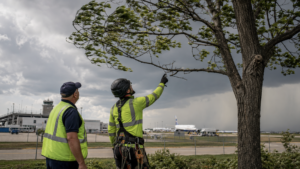
Airport News for Arborists Near Me

Airports are built around precision. Runways must remain clear, access roads must stay open, lighting and communication systems must continue working, and emergency crews must be able to move without delay. Severe weather can disrupt every part of that system in a matter of minutes. High winds, saturated soil, lightning, hail, and heavy rain can turn a mature tree from an attractive part of the property into a serious operational hazard.

Tree care at an airport is therefore more than routine landscaping. It is a form of risk management. A qualified arborist can identify weak trunks, damaged roots, unstable limbs, overgrown canopies, and trees that may interfere with visibility, equipment, roads, fences, or protected airspace. That work is most valuable before a storm reaches the airport, while there is still time to correct problems in a controlled manner.

An airport is a complicated operating environment that combines aircraft movement, passenger services, emergency response, maintenance, security, utilities, and ground transportation. Trees and vegetation may appear to occupy only the edges of that environment, yet their condition can affect several airport systems at once. A proactive inspection can reduce preventable damage, support faster recovery, and help airport leaders protect passengers, employees, aircraft, and surrounding communities.

Storm Preparation Begins at Ground Level

Storm preparation often focuses on forecasts, flight schedules, drainage, generators, staffing, and emergency communications. Those measures are essential, but the condition of the airport grounds deserves the same attention. A tree with a weakened root system may remain standing through ordinary weather and fail when the soil becomes saturated. A large limb with an old crack may look stable until repeated wind gusts place additional pressure on the damaged union.

The Federal Aviation Administration’s airport safety resources emphasize organized safety practices, airport certification, runway safety, wildlife management, and safety management systems. Vegetation belongs within that wider safety picture because it can create hazards that cross departmental lines. A fallen tree near an access road may delay maintenance crews. Broken limbs near a parking area may damage vehicles or injure pedestrians. Debris near an operational surface may require immediate inspection and removal before normal activity resumes.

A professional arborist examines more than the visible shape of a tree. The assessment considers trunk condition, root stability, canopy balance, branch attachment, decay, previous storm damage, soil changes, nearby construction, and the consequences of failure. At an airport, the consequences matter as much as the probability. A declining tree beside an unused field presents a different level of concern than the same tree beside a terminal road, fuel facility, perimeter fence, navigation installation, or emergency route.

Trees Can Become Airfield Hazards

Airports must maintain clear operating areas and protect the airspace used for arriving and departing aircraft. Trees that grow into restricted areas can become obstructions, while trees located outside those areas can still produce branches, leaves, and debris that move onto pavement during severe weather.

The FAA’s guidance on vegetation in the airport environment addresses the management of trees that penetrate or may eventually penetrate protected navigable surfaces. This guidance reflects a central airport-management principle: vegetation should be evaluated according to its location, mature height, growth pattern, and effect on safe operations. Removing a hazardous tree before a storm is usually safer, less disruptive, and more economical than handling an uncontrolled failure after the storm.

Tree debris can also contribute to foreign object debris concerns. The FAA defines airport foreign object debris broadly as material in an inappropriate location that can injure personnel or damage aircraft. The agency’s Foreign Object Debris Program explains why inspection, prevention, and prompt removal are important parts of airport safety. Limbs, bark, cones, stakes, damaged guards, and pieces of landscaping material can all be scattered by strong winds. Preventive pruning and careful site maintenance reduce the amount of material available to become airborne.

An Arborist Can Find Failure Points Before the Wind Does

Healthy-looking trees can contain defects that are easy to miss from the ground. Internal decay may be hidden behind intact bark. A narrow branch union may contain included bark that weakens the connection between two large stems. Roots may have been cut during utility work or compacted by vehicles. A tree may also lean because of recent soil movement rather than natural growth.

A qualified arborist reads these details as part of a complete risk assessment. The goal is not to remove every large tree near an airport. The goal is to identify conditions that create an unacceptable likelihood of failure or an unacceptable consequence if failure occurs. Appropriate work may include selective pruning, removal of deadwood, reduction of an overextended limb, cabling or bracing in suitable cases, soil improvement, monitoring, or complete removal.

Airports looking for a qualified local provider may begin with a reputable directory or a targeted search for Arborists Near Me, then verify credentials, insurance, equipment, airport experience, and familiarity with controlled-access work. Airport tree care requires disciplined coordination. Crews may need escorts, identification, radio procedures, equipment checks, traffic control, work-zone restrictions, and precise schedules that avoid conflicts with aircraft and passenger activity.

Severe Weather Can Disrupt More Than Flights

Airport storm coverage often centers on delays and cancellations, but the work on the ground is equally important. The FAA’s Daily Air Traffic Report routinely identifies thunderstorms, high winds, low clouds, and other weather conditions that may affect major airports. These reports illustrate how quickly weather can influence the national aviation system. A local tree failure can add another operational problem at the exact moment airport teams are already managing weather-related pressure.

A blocked service road can slow inspections. A tree across a public entrance can interrupt passenger access. Fallen limbs can damage fencing, signs, lighting, parked vehicles, utility lines, or communication equipment. Debris may clog drains and worsen localized flooding. Even when the runway remains open, damage elsewhere on the property can affect staffing, security, customer movement, deliveries, and emergency response.

The National Weather Service aviation program notes that thunderstorms can produce lightning, heavy rain, hail, and gusty or erratic winds. Those conditions place trees under several forms of stress at once. Wind loads the canopy, saturated soil weakens root anchorage, and lightning can damage a tree immediately or create injuries that lead to decline later. An arborist helps airport managers understand which trees are most likely to fail under those combined conditions.

Vegetation Management Also Supports Wildlife Control

Trees provide shade, visual appeal, erosion control, and environmental benefits, but the wrong species in the wrong location can attract birds or other wildlife. Fruit, seeds, dense cover, nesting sites, and standing water near vegetation may increase wildlife activity in areas where it creates an aviation concern.

The FAA’s wildlife management guidance explains that airport wildlife management may involve habitat modification and other methods designed to reduce hazardous animal activity. Arborists can contribute useful knowledge about tree species, seasonal fruiting, canopy density, nesting potential, and vegetation changes that may influence wildlife patterns. Tree decisions should therefore be coordinated with the airport’s wildlife-hazard strategy rather than treated as isolated landscaping choices.

This coordinated approach prevents one department from solving a problem while unintentionally creating another. Planting a dense row of attractive trees may improve the appearance of a public roadway, yet the same planting could obstruct views, interfere with security observation, attract flocking birds, or create a future maintenance burden. An arborist working alongside airport operations, environmental staff, engineers, and wildlife specialists can help select practical solutions that account for mature size and long-term behavior.

Clear Access Matters During Emergency Response

Storm recovery depends on movement. Airport police, firefighters, maintenance teams, utility crews, contractors, and medical personnel need dependable routes across the property. Trees near emergency gates, fire roads, service drives, and perimeter access points deserve special attention because a single failure can isolate an area or force responders to take a longer route.

Pre-storm arborist work can prioritize those locations according to consequence. Dead limbs above a little-used landscaped area may be scheduled for routine maintenance. A compromised tree beside an emergency entrance may require immediate action. This type of prioritization helps airports direct limited time and resources toward the hazards most likely to affect life safety and continuity of operations.

The same principle applies to public areas. Passengers may gather near terminal entrances, shuttle stops, rental-car facilities, parking structures, and pickup lanes. Trees around these locations should be evaluated for hanging branches, weak attachments, root damage, poor clearance, and conflicts with signs or lighting. Preventive care protects people while preserving healthy trees that contribute to a more welcoming airport environment.

A Written Tree Plan Strengthens Airport Resilience

A one-time inspection can identify urgent problems, but a documented tree-management plan provides greater long-term value. The plan can map significant trees, record condition ratings, note maintenance history, identify high-consequence targets, establish inspection intervals, and define the steps to follow before and after severe weather.

That information supports continuity when staff members change. It also gives airport leadership a defensible record of inspections, recommendations, completed work, and deferred work. Documentation does not eliminate risk, but it improves decision-making and makes it easier to identify patterns. Repeated limb failures, declining groups of trees, drainage changes, or construction-related root damage become clearer when observations are recorded consistently.

The Airports Council International discussion of resilient airport design emphasizes the need to consider infrastructure, operations, environmental conditions, and business continuity together. Tree management fits naturally within that approach. A resilient airport does not wait for visible damage before examining a known exposure. It identifies vulnerable systems, reduces avoidable hazards, and prepares recovery resources in advance.

The Best Inspection Happens Before the Forecast Becomes Urgent

Arborist work is easier to schedule before a storm is only hours away. Crews need time to inspect the property, prepare recommendations, coordinate access, secure equipment, complete pruning or removal, and dispose of debris. Last-minute work also creates its own risks when wind, lightning, or heavy rain is already approaching.

A practical airport program includes routine inspections during calmer periods and an additional review before the region’s primary severe-weather season. Airports in hurricane-prone areas may focus on wind resistance, drainage, saturated soils, and emergency access. Airports in regions with ice storms may place greater emphasis on included bark, end-heavy limbs, brittle species, and branches over power lines or roadways. Tornado, thunderstorm, wildfire, and heavy-snow regions each create different priorities.

Weather information remains central to this process. NOAA’s overview of aviation weather describes the operational importance of wind, visibility, precipitation, thunderstorms, and other atmospheric conditions. An arborist adds site-specific tree knowledge to that broader weather awareness, helping airport managers connect the forecast with conditions already present on the property.

Conclusion

Every airport depends on preparation, coordination, and clear operating space. Trees become part of that responsibility when their location or condition can affect aircraft areas, roads, fences, utilities, drainage, emergency access, wildlife activity, employees, or passengers. A storm does not create every tree defect. It exposes defects that were already present and applies enough force to turn them into failures.

A professional arborist gives airport leadership the opportunity to act before that happens. Through inspections, risk prioritization, preventive pruning, removal, species guidance, and written planning, arborists help reduce avoidable damage and support a faster return to normal operations. Their work protects more than the landscape. It supports the safety, resilience, and reliability of the entire airport.

The strongest time to inspect a vulnerable tree is not after it falls across a road or damages critical equipment. It is before the next storm reaches the airfield, while the airport still has control over the schedule, the work zone, and the outcome.

Why The Sinsworn Chronicles, Book II: The Forbidden Flame Belongs on Every Pilot’s Reading List ✈️

Airlines News for epic fantasy novels

Flying requires more than technical skill. It takes discipline, calm judgment, emotional control, situational awareness, and the ability to think clearly when the world around you becomes loud, fast, and unpredictable. Airline pilots live in a world where every decision matters, every detail counts, and every journey depends on preparation, focus, and trust. That is exactly why The Sinsworn Chronicles, Book II: The Forbidden Flame deserves a place on every pilot’s reading list.

At first glance, a fantasy novel and the cockpit of a commercial aircraft may seem far apart. One belongs to the world of runways, procedures, weather systems, air traffic communication, and passengers depending on safe arrival. The other belongs to a world of ancient power, dangerous choices, hidden loyalties, and characters forced to confront forces bigger than themselves. Yet the connection is stronger than it may appear. Great stories help people process pressure, courage, leadership, consequence, and resilience. For pilots, who spend their careers balancing precision with human instinct, a powerful story can become more than entertainment. It can become a mental reset, a source of reflection, and a reminder of what it means to carry responsibility well.

A Story Built for People Who Understand Pressure

Airline pilots know what it means to operate under pressure. They are trained to remain steady in situations where others might panic. Their work depends on systems, planning, communication, and the ability to respond with clarity. The aviation world is filled with reminders that focus and discipline matter. The Federal Aviation Administration’s pilots portal provides guidance on certification, training, regulations, and safe flying because aviation is built on constant learning and sharp decision-making.

The Forbidden Flame speaks to that same mindset through story. It pulls readers into a world where the stakes are high and where characters cannot afford careless choices. Every decision has weight. Every alliance matters. Every moment of hesitation can change what happens next. That kind of storytelling naturally appeals to people who understand the value of precision.

Pilots often read during layovers, between trips, or after long stretches of intense focus. The right book gives the mind somewhere meaningful to go. It should not feel shallow or forgettable. It should pull the reader into a world with purpose, conflict, and emotional depth. The Forbidden Flame offers that kind of escape while still honoring the mindset of readers who appreciate strategy, courage, and consequence.

Why Pilots Connect with High-Stakes Fantasy

The best epic fantasy novels are not only about magic, battles, or imagined kingdoms. They are about choices. They are about what people do when they are tested. They are about loyalty, sacrifice, fear, leadership, and the fight to keep moving when the path ahead becomes uncertain.

That makes fantasy especially fitting for airline pilots. A pilot’s career is built around preparation, but every flight also carries variables. Weather shifts. Schedules change. Systems require attention. Crews must communicate clearly. Passengers rely on professionalism they may never fully see. The role of an aircraft pilot has always carried a unique blend of technical skill and human responsibility.

In The Forbidden Flame, readers are invited into a world where characters must face danger with intelligence, courage, and conviction. That resonates with people who know that true strength is not loud. It is steady. It is trained. It is the ability to stay grounded when circumstances become demanding.

For pilots, the fantasy genre can also provide something valuable: distance. A story set in another world allows readers to step away from real-world stress while still engaging with themes that feel deeply relevant. It gives the mind rest without asking it to shut down completely. It creates room for imagination, reflection, and emotional release.

A Meaningful Escape Between Flights

Airline schedules can be exhausting. Long days, changing time zones, unpredictable delays, and time away from home can make mental rest essential. A good book can become a reliable companion during hotel stays, airport waits, crew breaks, and quiet moments after a trip. It offers something better than scrolling, noise, or shallow distraction. It gives the reader a place to land.

Aviation professionals already live in an industry where timing, performance, and safety matter. The Bureau of Transportation Statistics airline on-time tables show how closely the industry tracks performance and operational movement. Pilots are surrounded by measurement, systems, and accountability. Reading fiction gives the brain a different kind of nourishment. It allows the reader to step into a story that does not demand a checklist, yet still rewards attention.

The Forbidden Flame is the kind of book that can make a layover feel less empty. It gives pilots a story with momentum, conflict, and emotional pull. Instead of simply passing time, they can enter a world that feels alive. That matters because rest is not only about sleep. Rest is also about giving the mind something meaningful, enjoyable, and separate from the constant demands of the job.

Leadership, Loyalty, and Moral Courage

Pilots are leaders. Whether they are captains, first officers, instructors, or crew members building experience, they operate in environments where communication and trust are essential. Leadership in aviation is not about ego. It is about judgment, responsibility, humility, and the ability to work as part of a team.

That is one reason The Forbidden Flame fits so well for pilots. The story’s deeper appeal is not only its fantasy setting. It is the human struggle beneath the adventure. Characters must decide who they trust, what they stand for, and how far they are willing to go when the cost becomes personal. Those themes matter to any reader, but they may feel especially meaningful to people in high-responsibility careers.

The aviation industry continually emphasizes safety culture, training, and shared responsibility. The FAA pilot safety resources are a reminder that good flying is never only about individual talent. It is about systems, awareness, reporting, learning, and discipline. In the same way, a strong fantasy story often reveals that victory rarely comes from one person acting alone. It comes through courage, sacrifice, wisdom, and trust.

Pilots understand that leadership is often quiet. It happens in preparation, communication, correction, and composure. The Forbidden Flame gives readers a story where leadership is tested under pressure, making it a strong fit for those who appreciate characters who must earn their strength.

A Book That Respects Intelligence and Imagination

Pilots are trained thinkers. They are used to absorbing information, recognizing patterns, and making decisions based on both knowledge and context. Many pilots enjoy books that challenge them, not books that talk down to them. The Forbidden Flame offers a layered reading experience for people who enjoy world-building, rising tension, character growth, and meaningful conflict.

The aviation world is also global. Pilots cross borders, cultures, landscapes, and time zones. They see the world from a perspective most people never experience. That global mindset pairs naturally with fantasy literature, where readers move through unfamiliar places and learn new rules, histories, dangers, and loyalties. The International Civil Aviation Organization news reflects how connected aviation is across nations, safety standards, and global concerns. A pilot’s world is wide, and fantasy speaks to readers who already understand the beauty and complexity of vast horizons.

The Forbidden Flame gives that same sense of scope. It invites readers beyond the ordinary and into a world shaped by conflict, belief, danger, and destiny. For pilots who spend their lives seeing cities from above and crossing into new places, a book with wide imaginative reach can feel especially satisfying.

The Value of Stories in a Safety-Focused Career

Aviation is rightly serious about safety. Organizations such as the National Transportation Safety Board Aviation Investigation Search and the Air Line Pilots Association safety resources reflect how much the industry values learning, prevention, and professional standards. Pilots spend their careers in a culture that studies what happened, why it happened, and how people can do better next time.

Stories also teach through consequence. Fiction lets readers experience danger, mistakes, courage, and redemption without real-world risk. That is one of the reasons powerful novels stay with people. They allow readers to feel the weight of choices and consider what they would do under pressure. For pilots, that kind of thoughtful reading can be especially meaningful because their work already requires awareness of cause and effect.

The Forbidden Flame is not a training manual, and it should not be treated like one. Its value is different. It gives pilots a dramatic, imaginative, emotionally charged story that honors the same deeper qualities that matter in the cockpit: focus, courage, loyalty, wisdom, and the willingness to face hard truths.

A Strong Reading Choice for Pilots Who Want More Than a Distraction

Some books are easy to forget the moment they are finished. Others leave a mark. The Sinsworn Chronicles, Book II: The Forbidden Flame belongs in the second category. It offers the kind of fantasy experience that gives readers adventure while also giving them something to think about. That matters for pilots who want more from their reading time than background noise.

A pilot’s life can be both thrilling and demanding. There is beauty in seeing the world from above, but there is also weight in carrying responsibility every time the aircraft leaves the ground. A strong novel can meet that kind of reader with a story that feels worthy of their attention. The Forbidden Flame does that by combining imagination with intensity, emotional stakes with action, and character-driven storytelling with a world that invites the reader deeper.

Conclusion

The Sinsworn Chronicles, Book II: The Forbidden Flame belongs on every pilot’s reading list because it offers the right blend of escape, intensity, leadership, and meaning. It gives pilots a story that respects focus and courage while also providing the imaginative distance needed after long hours in a demanding profession. For readers who understand pressure, responsibility, and the importance of clear choices, this book offers more than fantasy. It offers a powerful journey worth taking between flights, after landing, and anywhere the next chapter can be opened.

Why Airlines Should Invest in Stackable Pallets

Stackable Pallets for Airlines News

Airlines operate in one of the most demanding business environments in the world. They are constantly balancing safety, time, fuel costs, labor efficiency, cargo handling, customer expectations, and thin operating margins. Every decision about equipment, loading systems, and ground operations has a ripple effect across the network. That is exactly why stackable pallets deserve serious attention. They may look like a simple logistics tool, but in an airline environment, simple tools often create some of the biggest operational wins.

The aviation industry is dealing with a landscape that keeps shifting. Cargo demand has remained important to airline economics, and the broader air cargo market continues to show resilience. According to IATA’s January 2026 cargo release, global air cargo demand reached record volume in 2025, while IATA’s March 2026 update reported another year-over-year increase in January 2026. At the same time, airlines are operating under pressure from airspace disruptions, route changes, and fuel volatility, issues reflected in recent Reuters airline coverage and other developments across the sector. In that environment, investing in smarter cargo-support systems is not optional thinking. It is strategic thinking.

A stackable pallet system can help airlines use warehouse and tarmac-adjacent storage more effectively, reduce wasted handling time, protect cargo, improve staging, and create more consistency from the cargo facility to the aircraft loading process. For airlines moving freight, mail, catering items, maintenance supplies, or airport support materials, stackable pallets can support a cleaner and more organized operation from end to end.

The Airline Business Runs on Space Efficiency

Airlines may be known for aircraft, gates, and flight schedules, but much of their profitability is shaped on the ground. Ground space matters. Cargo terminals, sorting areas, transfer zones, maintenance spaces, and support warehouses all depend on efficient storage. When pallets cannot be safely stacked, valuable square footage gets wasted. That forces teams to spread inventory out horizontally, which adds clutter, delays retrieval, and creates more forklift movement than necessary.

Stackable pallets solve that problem by allowing airlines to store more goods in the same footprint. That matters in high-cost airport environments where real estate is limited and expensive. It also matters when weather, peak season, or operational disruption causes temporary surges in cargo volumes. A stackable design gives airlines flexibility to absorb those surges without instantly needing more floor space.

This kind of efficiency fits naturally with how the aviation industry is trying to modernize. The FAA’s NextGen initiative is centered on improving the efficiency of the broader air transportation system, and while NextGen is primarily about airspace modernization, the same mindset applies to ground-side operations too. Airlines that make smarter use of support infrastructure put themselves in a stronger position to manage growth and disruption alike.

Better Ground Handling Leads to Faster Turnarounds

Turnaround time is one of the most valuable metrics in aviation. Every extra minute spent handling freight, supplies, or equipment can contribute to delays, congestion, and missed connections across a network. Airlines work hard to reduce friction on the ground, and stackable pallets can help by making cargo and materials easier to stage, sort, identify, and move.

Instead of dealing with scattered items or awkward non-stackable loads, teams can organize freight in a way that supports faster movement through cargo facilities. Forklift operators and warehouse crews can work more predictably when pallet loads are standardized. That means less confusion, fewer bottlenecks, and smoother coordination between storage, build-up, breakdown, and dispatch.

This matters even more when airline operations are under pressure. The FAA has publicly emphasized the need to keep passengers and operations moving safely during peak travel periods, as seen in its 2025 Summer Air Traffic Operational Summit Readout. While that summit focused on passenger travel system readiness, it reinforces a broader point: airline systems perform better when every operational layer is disciplined and efficient. Ground logistics is part of that picture, and stackable pallets can strengthen it.

Air Cargo Growth Makes Better Pallet Systems More Valuable

Airlines are not just passenger carriers. Many are also cargo businesses, whether through dedicated cargo divisions, belly cargo capacity, charter partnerships, or mixed logistics models. The importance of cargo is not fading. IATA reported that 2025 delivered record global air cargo volume, and its early 2026 data showed continued demand growth. ICAO has also highlighted the long-term importance of air cargo in global trade and forecasts continued expansion in the years ahead through its air cargo program and sustainability work.

When cargo volumes are rising, airlines need support equipment that scales with them. Stackable pallets help build that scalability. They allow facilities to hold more goods before dispatch, organize transfer freight more cleanly, and manage overflow more effectively during busy periods. They also support better segregation of cargo types, which can be important for handling priority goods, perishables, retail shipments, or supplies moving through complex hubs.

For airlines dealing with growing cargo flows, the question is not whether pallets matter. The question is whether the pallet system in use is helping or holding the operation back. A stackable system provides a more flexible answer, especially where space and speed are both critical.

Lower Damage Risk Protects Revenue and Reputation

Airlines do not only lose money when aircraft sit idle. They also lose money when cargo is damaged, misplaced, crushed, or poorly staged. Damage claims, replacement costs, service recovery, and strained shipper relationships all eat into profitability. Poor storage methods often create avoidable handling issues long before cargo gets near the aircraft.

Stackable pallets can reduce those risks by promoting cleaner load organization and safer vertical storage. When designed properly, they help prevent the random pileups and unstable placements that can happen in fast-moving facilities. A more orderly storage setup also makes it easier for staff to identify compromised packaging before it becomes a bigger problem.

That matters because airlines increasingly operate in a world where reliability is watched closely. Cargo customers want visibility, consistency, and less disruption. News coverage of the airline sector regularly highlights how quickly operational stress can impact broader performance. For example, recent Reuters reporting on Gulf aviation disruption showed how external shocks can put airline systems under immediate pressure. When the outside world becomes less predictable, the internal operation needs to become more disciplined. Stackable pallets are one small but meaningful way to create that discipline.

Stackable Pallets Support Safer and More Standardized Operations

Safety is never a side issue in aviation. Every process on the ground has to support safer movement, safer storage, and safer handling. A cluttered cargo area increases risk. A poorly organized warehouse increases risk. Unstable loads increase risk. In a business where small mistakes can create expensive consequences, standardization matters.

Stackable pallets support more consistent operating procedures. Teams can be trained around repeatable storage heights, staging layouts, and movement patterns. That creates a cleaner environment for warehouse personnel, forklift drivers, and cargo handlers. It can also simplify planning for overflow situations and irregular operations.

The broader air cargo ecosystem is already focused on harmonized safety and security solutions. ICAO described that priority in connection with its global air cargo initiatives, including efforts to bring governments, airlines, airports, and logistics stakeholders together around more sustainable and secure air cargo growth. That kind of industry direction supports the case for investing in better physical logistics infrastructure, not just better software or better aircraft utilization.

Sustainability Is Not Only About Aircraft

When people think about sustainability in aviation, they usually think about fuel, fleet renewal, sustainable aviation fuel, or emissions strategy. Those are major issues, but sustainability also includes smarter use of materials, smarter use of space, and fewer wasted movements on the ground.

Stackable pallets can contribute to those goals in practical ways. When airlines store more effectively, they can reduce unnecessary transport inside facilities. When loads are easier to stage and retrieve, ground support equipment can operate more efficiently. When reusable pallet systems are durable and designed for repeated handling, they can support a longer-term asset strategy compared with less efficient alternatives.

ICAO’s sustainability work continues to emphasize environmentally and economically sustainable growth in air cargo, and that pairing matters. Airlines need solutions that are both greener and financially sensible. Stackable pallets fit that kind of thinking because they can lower operational waste while improving throughput. Even something as basic as better storage density can have a measurable effect when multiplied across a major hub or network.

For broader context on how palletized and air cargo systems function within aviation logistics, even a general overview such as Wikipedia’s air cargo entry helps show how central structured freight movement is to airline economics and supply chain performance.

Airlines Need Resilience, Not Just Capacity

The modern airline business is constantly being tested by disruptions. Weather, labor constraints, geopolitical risk, airport congestion, route suspensions, and changing trade flows can all force rapid operational adjustments. Reuters reported this week that Lufthansa has been shifting capacity as conflict and fuel uncertainty reshape parts of the market, while other airline operations in the Middle East have faced diversions, limited resumptions, and schedule changes. Those developments are reminders that resilience is now one of the most important assets an airline can build.

Resilience is not built only through schedules and aircraft. It is also built through systems on the ground that can flex when conditions change. Stackable pallets give airlines a more adaptable storage and handling framework. They make it easier to hold inventory during delays, reorganize space during disruptions, and keep cargo moving through constrained areas. When an operation is stressed, organized equipment becomes even more valuable than it is on a normal day.

That is why this investment should not be seen as minor warehouse spending. It should be seen as infrastructure that supports continuity. Airlines that invest in practical, ground-level efficiency tools are better positioned to protect service, reduce friction, and absorb shocks without losing control of the operation.

Conclusion

Airlines should invest in stackable pallets because they support the exact outcomes the aviation industry needs most: better use of space, faster handling, lower damage risk, improved standardization, stronger resilience, and more efficient cargo support. In a business defined by pressure and precision, even a straightforward logistics asset can produce meaningful operational value.

The airline industry is facing rising complexity, ongoing cargo demand, and constant pressure to perform with greater efficiency. That makes this the right time for airlines to think beyond aircraft and look closely at the ground systems that support them. Stackable pallets are not flashy, but they are practical. They help airlines do more with the space, labor, and infrastructure they already have. In aviation, that kind of investment is often where real advantage begins.

Virginia Airports + BIM Services Virginia: A Partnership That Keeps Projects Moving and Passengers Happy ✈️🏗️

Airlines News for BIM Services Virginia

Virginia airports operate in a world where construction never really stops. Terminals evolve, security and baggage systems get upgraded, airfield assets age, and passenger expectations rise. All of that happens while planes still need to land on time, tenants still need to operate, and travelers still need a clean, safe, navigable experience.

That is exactly why Virginia airports benefit from a direct partnership with a BIM Services Virginia company. Building Information Modeling is not a pretty 3D picture. It is a practical way to plan, coordinate, build, and maintain complex airport facilities with fewer surprises, fewer conflicts, and better long-term control of assets. When airports treat BIM as a strategic capability instead of a one-off deliverable, they shorten timelines, protect operations, and make every capital dollar work harder.

Airports Are High-Stakes, High-Complexity Construction Environments

Airport projects are different from typical commercial construction. Many upgrades must be phased tightly to avoid disrupting passengers, airlines, TSA checkpoints, concessionaires, baggage operations, and airfield safety. Utility corridors can be dense and legacy documentation can be incomplete. Stakeholders can include airport authorities, airlines, federal agencies, design teams, contractors, and technology vendors, all with different priorities and schedules.

A BIM Services Virginia partner brings order to that complexity by creating a shared, data-backed model of what exists and what is being changed. Instead of separate drawings and disconnected spreadsheets, the airport gains a coordinated digital environment where teams can align on scope, sequencing, and constraints before work begins.

Airports also sit inside a rapidly changing aviation landscape with constant attention on safety, capacity, efficiency, and resilience. Industry updates from organizations and outlets like the IATA Pressroom, the FAA Newsroom, and global aviation news coverage such as FlightGlobal News illustrate how quickly priorities shift across the airline ecosystem. A strong BIM partnership helps Virginia airports respond to those shifts with less rework and more confidence.

BIM Reduces Construction Risk Through Clash Detection and Coordination

One of the most immediate benefits is coordination. Airports are packed with mechanical, electrical, plumbing, fire protection, communications, security, and baggage systems that frequently intersect. When projects rely on 2D drawings alone, conflicts often appear in the field, right when schedule pressure is highest and costs are hardest to control.

A BIM Services Virginia team runs coordination workflows that identify clashes before they become change orders. That means fewer delays, fewer emergency reroutes, fewer night-shift surprises, and better predictability for airport leadership.

This is especially valuable in terminal renovations where ceilings, MEP racks, security infrastructure, and concession buildouts compete for space. BIM allows the airport and its contractors to confirm clearances, access panels, and maintainability, not just theoretical fit.

BIM Supports Phasing That Protects Daily Airport Operations

Airports cannot simply close a building for a renovation. They must phase work around passenger flows, sterile areas, airline gates, baggage belts, and peak travel periods. BIM supports operational phasing by letting teams simulate logistics, temporary pathways, and sequencing.

A Virginia airport partnership with a local BIM provider is particularly powerful because the BIM team can integrate local construction realities, regional labor and supply constraints, and stakeholder coordination norms that vary by market. The result is a model-based plan that is easier to communicate, easier to enforce, and easier to adapt when schedules shift.

It also aligns with the industry’s ongoing focus on operational reliability and modernization, themes that show up consistently in aviation infrastructure announcements and reporting across the sector, including coverage from outlets such as Reuters Aerospace & Defense. When airports modernize while staying open, the winners are the passengers, the airlines, and the airport’s revenue stability.

BIM Improves Cost Control With Quantity Takeoffs and Better Procurement

Airport projects have expensive systems and long lead times. BIM helps cost control by supporting more reliable quantity takeoffs and a clearer understanding of scope. When procurement teams can see quantities and system relationships earlier, they can time purchases better, reduce waste, and avoid last-minute substitutions.

This matters for everything from structural steel to baggage handling components to specialized MEP equipment. With a consistent model, stakeholders can also evaluate alternates quickly without losing track of downstream impacts.

Better cost predictability also supports grant compliance and reporting. Airports often face strict requirements tied to funding sources and regulatory oversight. BIM provides a structured way to document scope, changes, and as-built conditions, making reporting less painful and more defensible.

BIM Creates a Digital Foundation for Asset Management and Maintenance

The value of BIM extends beyond construction. Airports run on assets: doors, jet bridges, chillers, pumps, panels, conveyors, cameras, and controls. A BIM Services Virginia partner can help deliver a model that supports facilities and maintenance teams, not just the design and construction team.

When the model is set up with the right data fields, naming conventions, and handover requirements, the airport gains a usable digital reference for locating equipment, planning shutdowns, and scheduling maintenance. Over time, that can reduce downtime and extend asset life.

This is where BIM begins to resemble a practical “digital twin” foundation. Airports that maintain a reliable digital record of what they own can move faster on future renovations, respond more confidently to outages, and plan capital improvements with clearer insight.

BIM Strengthens Safety, Security, and Compliance Planning

Airports have security-driven constraints that affect design and construction. Sterile areas, access control, camera coverage, and life-safety requirements all need to be coordinated with architecture and MEP systems. BIM helps teams validate pathways, secure boundaries, and installation sequencing, reducing the chances of late changes that can compromise schedules.

It also improves coordination for inspections and turnover. A model-based view of systems can make commissioning more organized, help track punch lists, and support clearer documentation for regulators, insurers, and internal governance.

In an industry where standards and expectations are continuously discussed and updated, airports benefit from staying connected to trusted sources of aviation information and trends, including the ACI World Newsroom, which regularly highlights airport-focused developments and operational priorities around the world.

A Virginia-Based BIM Partner Improves Speed, Accountability, and Communication

A BIM Services Virginia company can be more than a vendor. It can be an extension of the airport’s capital projects team.

Local proximity and regional familiarity support faster site visits, better stakeholder engagement, and easier collaboration with Virginia-based architects, engineers, and contractors. It also creates accountability. When a BIM team is embedded in the region, they tend to be more invested in long-term relationships, consistent standards, and outcomes that matter to the airport’s leadership.

That partnership approach helps airports standardize BIM requirements across multiple projects. Instead of reinventing deliverables every time, airports can build a repeatable playbook for modeling, coordination, and handover. That consistency is where BIM becomes a long-term advantage, not a one-time line item.

BIM Helps Airports Communicate Clearly With Airlines, Tenants, and the Public

Airport projects affect airlines, concessionaires, rental car operations, and passenger services. BIM helps communication by offering clear visualizations and phasing diagrams that are easier to understand than dense plan sets. That reduces misunderstandings, sets expectations earlier, and supports smoother coordination with stakeholders who are not living in construction drawings every day.

It also supports internal alignment. When leadership teams can see the plan and understand the operational impacts, decision-making becomes faster and less reactive. That reduces the “surprise factor” that creates last-minute scope changes and schedule compression.

Aviation Is Evolving Fast, and Airports Need Tools That Keep Up

From capacity pressure to technology upgrades to infrastructure modernization, airports are under constant pressure to improve. Aviation is an intensely documented and continuously reported industry, with reliable context available through sources like FlightGlobal and global airline industry organizations. A shared understanding of the aviation environment helps airports plan strategically, and BIM gives them the technical execution framework to deliver projects without disrupting the mission.

For foundational context on the airline ecosystem itself, a solid reference point is Wikipedia’s Airline overview, which outlines what airlines are and how the industry functions at a high level. When airports and airlines are aligned, and the airport’s infrastructure projects run smoothly, the entire travel experience improves.

Conclusion: BIM Turns Airport Construction Into a Competitive Advantage ✅

Virginia airports that partner with a BIM Services Virginia company gain more than coordinated drawings. They gain a structured way to reduce risk, control costs, protect operations, and build a lasting digital foundation for future upgrades. In an environment where disruptions are expensive and stakeholder complexity is unavoidable, BIM is a practical strategy for making airport projects calmer, clearer, and more predictable.

When Virginia airports invest in BIM as an ongoing partnership, they create a repeatable advantage: faster coordination, cleaner handovers, and facilities that are easier to operate for years to come. That is the kind of behind-the-scenes excellence passengers feel, airlines appreciate, and airport leaders can confidently stand behind. ✈️📈

Why an Oklahoma Airport Needs an Oklahoma Concrete Batch Plant to Keep Air Service Moving

Airlines News for Oklahoma Concrete Batch Plant

Airports do not stay reliable on goodwill and flight schedules alone. They stay reliable on pavement that performs under constant weight, vibration, weather swings, de-icing cycles, and round-the-clock operations. In Oklahoma, where temperature shifts, wind, and heavy rain events can stress airfield surfaces, concrete work is not a side project. It is a core operational requirement that protects airlines’ on-time performance, passenger experience, cargo flow, and long-term airport growth.

At the center of that reliability is a practical truth: when an airport depends on concrete, it benefits from having a concrete batch plant close enough to deliver consistent mix design, tight quality control, and fast turnaround. An Oklahoma concrete batch plant supports an Oklahoma airport by making runway and apron work more predictable, more durable, and easier to schedule around airline operations that keep getting busier as demand grows across the industry, including the trends reported by IATA and coverage of airport development and modernization in outlets like Aviation Week.

Oklahoma airports operate on pavement performance, not just pavement presence


An airport’s most critical “infrastructure” is the network that aircraft physically use: runways, taxiways, aprons, hardstands, and service roads. These surfaces carry repeated loads from aircraft with high tire pressures, tight turning movements near gates, and braking forces on landing. Concrete is often selected for these high-stress areas because it can deliver long service life and resist deformation under heavy loads, especially in apron and taxiway environments where aircraft dwell, pivot, and idle.

For an Oklahoma airport, concrete is also a risk-management decision. Surface distress can increase foreign object debris risk and lead to aircraft damage, delays, and gate impacts. When airlines are preparing for high passenger volumes and peak travel seasons, airports have less flexibility to close critical pavement without disrupting schedules, which is one reason the broader airline ecosystem tracks operational chokepoints and congestion so closely, including trusted-traveler program impacts and passenger flow concerns covered by Reuters.

A local batch plant becomes part of the operational solution. It improves the airport’s ability to plan, execute, and maintain concrete pavement work with fewer variables and fewer surprises.

A local concrete batch plant shortens the time between “problem found” and “runway back open”


Airports live by the clock. The longer a runway or taxiway is closed, the more the ripple spreads into airline rotations, missed connections, crew timing, cargo commitments, and passenger confidence. Concrete work is not always an emergency, but when it is, the speed of mobilization matters.

A nearby Oklahoma concrete batch plant helps in three practical ways:

  1. Faster delivery windows for pours and repairs. Concrete is time-sensitive. Excess transit time can raise risk around slump loss, temperature, and workability. Shorter haul distances help keep the mix within desired placement characteristics and reduce the need for on-the-fly adjustments.

  2. More realistic overnight and off-peak construction sequencing. Airports often schedule pavement work overnight or in narrow operational windows to reduce disruption. A local plant makes those windows more achievable because supply can be staged and dispatched with tighter control.

  3. Rapid response for unplanned panel replacement or localized failures. When an airport identifies a safety-critical issue, a local plant can support a faster response cycle and reduce downtime.

Industry reporting shows airports around the world are pushing modernization and expansion to keep pace with airline network demand and passenger growth, and that modernization frequently includes airfield capacity, stands, and pavement-related work, as highlighted in Aviation Week’s airport updates. A local batch plant supports that modernization pace at the practical level where projects either stay on schedule or slip.

Consistency and quality control protect the airport’s long-term pavement investment


Airport concrete is not the same as a typical commercial slab. Mix design, strength targets, durability requirements, air entrainment, and finishing tolerances are tied to safety and lifecycle performance. Variability can become expensive fast, especially when a pavement section must serve heavy operations for decades.

An Oklahoma concrete batch plant that regularly supports aviation and heavy civil work can provide:

  • Stable mix designs aligned with project specifications. The plant can calibrate and document proportions, moisture adjustments, and batching accuracy.

  • Better temperature management and admixture control. Oklahoma summers demand careful attention to heat, set time, and curing strategy. Winter placements can demand different adjustments.

  • Reliable supply of aggregates and cementitious materials. Local sourcing reduces uncertainty and helps maintain consistent performance characteristics over multi-phase projects.

This kind of controlled consistency becomes even more valuable when airports are expanding gates, stands, cargo areas, and maintenance space in response to airline operational needs. Airports and airlines track reliability because reliability shapes demand, and demand shapes investment. The airline industry’s passenger growth and capacity dynamics are tracked in ongoing updates like IATA’s air transport outlook materials, and airports must turn those macro trends into concrete that holds up under real-world operations.

Local batching supports phased construction that keeps airline operations stable


Airports rarely shut down major concrete areas all at once. Most airport construction is phased to preserve access to runways, taxiways, gates, and emergency routes. Phasing reduces disruption, but it increases coordination complexity. Each phase must meet operational constraints and deliver a finished section that integrates cleanly with the next phase.

A nearby batch plant supports phased construction by enabling:

  • Steady pours across multiple nights or short closures. When a project requires repeated placements, consistent supply helps maintain quality and reduces the risk of cold joints, schedule gaps, or rushed finishing.

  • Better alignment with airline and ground operations schedules. Concrete placement and curing can be planned around operational priorities rather than around distant supply limitations.

  • More flexibility in sequencing. If weather changes or operational constraints shift, the airport has more options to adjust without losing the entire production plan.

This flexibility matters in an era where airports are investing heavily and airlines are balancing aircraft availability, maintenance cycles, and changing passenger patterns. It also matters as airports accommodate more maintenance, repair, and overhaul activity and new facilities, a trend frequently covered in aviation business reporting such as FlightGlobal.

Concrete is a resilience strategy in extreme heat and high-load environments


Airports have to design for resilience. Surface performance under heat is a recurring aviation infrastructure concern, and airport pavement materials are part of that conversation. When temperatures surge, pavements can experience stress that affects operations and maintenance strategy. Industry reporting has highlighted how heat events have stressed airport runways and increased focus on infrastructure resilience, including coverage by Reuters.

For an Oklahoma airport, resilience is not abstract. Pavement must tolerate:

  • Thermal cycling that stresses joints and surfaces

  • Heavy aircraft loads and repetitive movements

  • Weather-driven maintenance cycles that cannot disrupt airline schedules

A local batch plant supports resilience by making it more feasible to deliver the right concrete for the right application, at the right time, with consistent results. That means fewer reactive repairs, fewer operational disruptions, and better long-term cost control.

Oklahoma airports compete on reliability, growth readiness, and passenger experience


Airports compete even when they do not call it competition. They compete for routes, for airline partnerships, for cargo contracts, for conventions, for business travel, and for the confidence of travelers who choose where to connect and where to start their trip. They also compete in how well they can modernize without causing operational chaos.

When airline demand is strong, airports that keep construction organized and disruptions limited are better positioned to handle growth. Airlines are already forecasting and preparing for heavy travel periods, including the expectations shared by Airlines for America. Infrastructure that stays dependable helps airlines add frequency, maintain on-time performance, and keep gate operations smoother.

A concrete batch plant close to the airport helps turn capital plans into completed projects, not endless phases. It supports runway and apron renewal, gate-area concrete work, cargo hardstands, fuel farm access routes, snow and equipment pads, and service roads that keep operations moving behind the scenes.

It also supports safety culture. Airports are under constant pressure to reduce risk, protect passengers, and keep aircraft movement areas in excellent condition. That safety expectation extends beyond the terminal and into the materials and methods that keep aircraft operating reliably. The aviation ecosystem’s attention to operational safety and efficiency is reflected in ongoing policy discussions and aviation coverage, including baseline definitions and industry structure captured even at the reference level in Wikipedia’s overview of airlines.

Conclusion


An Oklahoma airport needs an Oklahoma concrete batch plant for the same reason it needs reliable power, trained operations teams, and well-maintained equipment. Concrete is not just a construction material at an airport. It is a foundation for safety, capacity, and the ability to serve airlines without disruption. A nearby batch plant improves the speed, quality, and predictability of critical pavement work, supports phased projects that keep flights moving, and strengthens long-term resilience under demanding conditions.

As airline demand continues to climb and airports modernize to keep up, the airports that can execute airfield concrete work with control and confidence will protect their schedules, their budgets, and their reputation with carriers and travelers alike.

Pilots Who Think Like Analysts Fly Further: Why a Business Analyst Course Belongs in Every Cockpit ✈️📊

Airlines News for business analyst course

A modern pilot already operates inside one of the most complex systems on Earth. Every flight is a chain of interconnected decisions shaped by weather, aircraft performance, maintenance realities, air traffic constraints, passenger flows, regulations, costs, and safety margins. Airlines run on thin operational tolerances, and the industry is increasingly driven by data, automation, and network-level planning. In that environment, a business analyst mindset becomes a powerful career advantage for any pilot who wants to thrive, lead, and make smarter decisions that scale beyond a single leg.

A business analyst course does not turn a pilot into an accountant or replace flight training. It sharpens how a pilot interprets information, frames problems, validates assumptions, and communicates decisions in ways that influence outcomes across dispatch, maintenance, scheduling, operations control, safety, customer experience, and profitability. It strengthens a pilot’s ability to translate cockpit reality into system improvements that reduce risk and waste while raising reliability.

Aviation Is a Data Business, Not Just a Flying Business

Airlines are transportation companies, but they are also forecasting companies. They forecast demand, crew availability, fuel exposure, maintenance events, weather impacts, gate utilization, and network disruptions. They also measure everything from turnaround time to fuel burn to on-time performance to delay codes to passenger reaccommodation patterns. Any pilot who can read, interpret, and act on that information gains influence inside the airline ecosystem.

A business analyst course builds practical fluency in metrics, dashboards, root-cause analysis, and decision frameworks. Instead of relying on gut feel alone, a pilot gains tools to evaluate what the data is truly saying, what it is not saying, and what actions are worth taking. That competence aligns naturally with the aviation culture of disciplined procedure and evidence-based safety, and it connects directly to how airlines report and respond to industry trends and performance signals covered in major aviation news outlets such as Reuters Aerospace & Defense.

Better Decisions Under Pressure Through Structured Thinking

Pilots already make time-sensitive decisions, but business analysis teaches a different layer of discipline: defining the problem correctly. Many operational headaches happen because the wrong issue gets solved. A delay might look like a gate problem when it is really a mis-sequenced inbound, a crew legality constraint, a maintenance planning miss, or a fragile connection bank.

Business analysis training reinforces structured approaches such as clarifying objectives, mapping stakeholders, identifying constraints, and separating symptoms from causes. It improves prioritization and reduces decision fatigue by giving pilots repeatable mental checklists that apply to operational decisions, leadership conversations, and post-event learning. That structure complements the way aviation organizations communicate safety and operational updates through industry channels like the IATA Pressroom.

Fuel, Efficiency, and Emissions Are Now Everyday Operational Realities

Efficiency is no longer a back-office discussion. It lives in flight planning, taxi strategy, climb profiles, cruise optimization, and operational choices during disruptions. Airlines face pressure to improve efficiency from regulators, customers, and cost realities, and the conversation around emissions and operational effectiveness shows up repeatedly in airline reporting and analysis.

A business analyst course equips pilots to understand the business impact of operational decisions without compromising safety. It helps connect the dots between small decisions and larger outcomes like fuel performance, schedule resilience, and carbon intensity. This is valuable not as a talking point, but as a practical skill that supports better coordination with dispatch, operations control, and flight operations leadership.

Stronger Communication With Dispatch, Maintenance, and Ops Control

A pilot’s credibility is strongest when communication is clear, specific, and actionable. Business analysis training improves how pilots document issues, quantify impacts, and propose solutions that other departments can implement. Instead of reporting that something “keeps happening,” a pilot can describe frequency, conditions, contributing factors, and likely root causes.

That style of communication accelerates fixes. It also builds trust across teams because it reduces emotion and increases clarity. In a world where airline operations are constantly discussed through professional reporting and operational briefings, pilots who can communicate with analyst-level precision become the people others rely on when things get tight. This is the same spirit of clarity that appears in structured aviation updates from sources such as the FAA Newsroom Press Releases.

Career Growth Into Leadership, Training, and Management Roles

Many pilots want more than seniority progression. They want to influence training standards, safety programs, operational policy, fleet transitions, or new technology adoption. Analyst skills translate directly into those paths because leadership roles require evaluating tradeoffs, presenting recommendations, and defending decisions with evidence.

A business analyst course strengthens presentation skills, stakeholder management, and executive-style writing. It also helps pilots understand how decisions get made at higher levels, including how constraints such as staffing, maintenance capacity, and network commitments shape what is possible. That perspective can be the difference between being heard and being ignored when advocating for safety improvements or operational changes.

Sharper Understanding of Industry Shifts and Airline Strategy

Pilots who understand the business side better can better navigate change. Mergers, fleet plans, route strategy, premium product moves, connectivity upgrades, and labor dynamics all influence cockpit life. Analyst training helps pilots interpret strategy and recognize what matters most for long-term stability and opportunity.

It also helps pilots engage with industry information more intelligently by separating headline noise from structural reality. Regular exposure to airline-focused reporting like the Associated Press Airlines hub trains the mind to watch patterns and implications, not just isolated events. That is exactly what business analysts do: they connect events to trends, and trends to decisions.

Business Analysis Makes Safety Culture Stronger, Not Weaker

Some pilots worry that “business thinking” could pressure safety. A good business analyst course does the opposite when the culture is healthy. It teaches that constraints must be surfaced and managed, not ignored. It encourages transparent risk assessment, clear documentation, and honest tradeoff discussions.

Safety management is built on data, reporting, trend analysis, and continuous improvement. Business analysis skills strengthen those muscles. A pilot who can evaluate trends, identify systemic contributors, and recommend measurable interventions becomes a safety multiplier. This aligns with how aviation safety priorities are communicated and reinforced across the broader ecosystem, including updates and guidance reflected through European aviation channels like EASA Press Releases.

A Practical Edge for Side Projects and Post-Flying Options

Some pilots build businesses, invest, consult, instruct, or plan second careers. Business analyst training supports all of it. It teaches how to define customer needs, map processes, measure outcomes, and improve systems. Those are portable skills that fit aviation-adjacent roles like safety analyst, dispatcher leadership, fleet performance, training design, and operational excellence, as well as non-aviation roles where disciplined thinking is prized.

Even for pilots who never leave the flight deck, analyst skills create resilience. They improve the ability to adapt when technology changes, when airlines adopt new tools, or when operating models shift. The airline world evolves quickly, and staying valuable means staying fluent in how decisions are made.

The Pilot-Analyst Is the Future-Proof Pilot

Pilots have always been professionals who combine technical skill with judgment. The next era rewards pilots who also think in systems, communicate in metrics, and lead with clarity. A business analyst course is not a distraction from flying. It is an amplifier of professionalism, influence, and long-term opportunity.

It helps pilots make cleaner decisions, collaborate better across departments, contribute to efficiency without sacrificing safety, and step confidently into leadership. It builds a language that connects the cockpit to the boardroom, and that connection is increasingly visible in the way airlines are covered, analyzed, and shaped through industry reporting such as Aviation Week Air Transport.

Conclusion

Aviation is still about skill and discipline, but it is also about systems, data, and decisions that ripple through an entire network. A business analyst course gives pilots a structured way to understand those ripples and to influence outcomes beyond their own flight plan. It strengthens communication, improves operational thinking, supports safety culture, and expands career options inside and outside the airline world. ✈️📈

For pilots who want to stay sharp, stay relevant, and lead in a rapidly evolving industry, learning to think like an analyst is a smart investment in the future of flying and the future of the pilot’s career. For broader background on how airlines function as organizations within the aviation ecosystem, the overview in Wikipedia’s Airline article provides a useful starting point.

Airline Hangars and Flat Roofs: Why Commercial Flat Roofing Companies Are the Smart Move for Aviation Facilities ✈️🏗️

Airlines News for Commercial Flat Roofing

Airline hangars are not typical buildings. They are massive, high-clearance structures designed to protect multi-million-dollar aircraft, support tight maintenance schedules, and keep operations running in every season. That scale and responsibility changes everything about the roof.

In many hangars, the roof is a broad, low-slope system that covers an enormous footprint. It has to manage water, wind, thermal movement, and long-term wear while protecting people, tools, avionics, and aircraft interiors from even minor leaks. That is why airlines and aviation facility managers so often rely on commercial flat roofing companies. These specialists bring the materials knowledge, installation capacity, safety systems, and maintenance discipline that large, low-slope roofs demand.

Along the way, the aviation industry keeps evolving, with fleet plans, operational pressures, and infrastructure constraints making headlines across trusted outlets like FlightGlobal, Aviation Week, and Reuters—and those shifts only increase the need for resilient facilities. Flight Global+2Aviation Week Network+2

What Makes an Airline Hangar Roof Different

Hangar roofs are often wide-span, low-slope systems built to cover huge bays without interior columns. That layout is perfect for moving aircraft and equipment, but it places a premium on roof performance. When a roof spans that much area, small issues scale up fast. A minor membrane failure can become a widespread leak path. A drainage problem can turn into standing water that stresses seams and accelerates deterioration.

Hangars also live in harsh environmental reality. Jet blast, vibration, temperature swings, UV exposure, and wind uplift are not theoretical risks. Commercial flat roofing companies are accustomed to designing and installing assemblies that account for these pressures through proper membrane selection, secure attachment methods, edge detailing, and durable flashing strategies.

And because aviation facilities often operate around the clock, roofing work must be planned with safety and sequencing in mind. Commercial crews that routinely handle hospitals, distribution centers, and large manufacturing sites are set up for that kind of coordination and compliance.

Leak Prevention Protects More Than the Building

In many industries, a roof leak is a nuisance. In an airline hangar, it can become an operational and financial problem quickly. Water intrusion can impact maintenance records, tooling, sensitive electronics, aircraft interiors, and parts inventory. It can also disrupt scheduled checks, inspections, and turnaround timelines.

Commercial flat roofing companies are built around systems and redundancies that reduce leak risk. They understand how to properly detail penetrations, transitions, and perimeter edges—the places where failures most often begin. They also bring testing approaches and documentation habits that facility teams appreciate because hangars are audited, tracked, and managed with a high level of accountability.

Airlines are constantly navigating operational challenges that make reliability more valuable than ever, including staffing and scheduling pressures that appear regularly in airline coverage. Reuters+1 A hangar roof that stays tight and predictable supports that mission without adding avoidable drama.

Flat Roofing Systems Fit the Scale and Function of Hangars

Large hangars frequently use low-slope assemblies because they are practical for spanning big footprints efficiently. Modern flat roofing systems can also support added facility goals like energy management, drainage performance, and future upgrades.

Commercial flat roofing companies typically work with proven systems such as single-ply membranes (like TPO, PVC, or EPDM) and other engineered assemblies designed for large roofs. The right choice depends on climate, wind zone, rooftop equipment, insulation strategy, and the hangar’s operational needs. A specialist contractor knows how to match the system to the building’s purpose and exposure instead of forcing a one-size-fits-all approach.

This matters because airlines plan facilities for the long haul. When industry outlooks and profitability expectations are reported by organizations like IATA, it reinforces how strategically airlines think about cost control and long-term resilience. IATA A well-designed roof helps stabilize operating costs through fewer emergency repairs and better thermal performance.

Maintenance and Inspection Keep Operations Predictable

Airline hangars do not get to “pause” for building problems. Facilities teams need predictable inspection cycles and maintenance plans that prevent surprises. Commercial flat roofing companies usually provide structured service programs that include routine walkthroughs, drain checks, seam inspections, and minor repairs before they become major issues.

That proactive rhythm is especially important on low-slope roofs, where drainage performance is a constant priority. If scuppers, internal drains, or gutters clog, water can pond. Ponding increases load, stresses seams, and shortens roof life. A commercial flat roofing partner treats drainage as part of the system, not an afterthought.

This kind of disciplined maintenance also supports capital planning. Instead of reacting to leaks, facility managers can forecast replacement windows, schedule work around aircraft maintenance cycles, and reduce disruption. That planning mindset fits right into the aviation world, where scheduling and operational reliability are always in focus across trusted airline coverage. 🛠️✈️

Safety, Compliance, and Risk Control Matter More at This Scale

Hangar roofing involves height, complex staging, large crews, heavy materials, and strict site rules. Commercial flat roofing companies invest in fall protection systems, training, safety documentation, and the supervision needed to operate safely around active aviation environments.

That is not just about worker safety. It is about protecting aircraft, protecting personnel on the ground, and ensuring the job does not interfere with flight-line rules or maintenance operations. Hangars can involve controlled access points, specialized lighting requirements, and strict cleanliness standards depending on the work being done inside. Commercial roofing specialists are more likely to have the process maturity to operate smoothly under those constraints.

Energy Efficiency and Climate Control Support the Whole Facility

Hangars are expensive to condition. Even when only parts of the space are heated or cooled, insulation and reflective roof strategies can make a real difference in comfort and cost. Commercial flat roofing companies regularly design roof assemblies with insulation thickness, vapor considerations, and reflective surfaces in mind.

When the roof helps stabilize indoor temperatures, it supports maintenance teams and protects materials stored inside. It can also reduce strain on HVAC equipment, improving reliability and lowering lifecycle cost. For facilities that want sustainability alignment, roofing choices can complement broader aviation initiatives that are frequently discussed in industry reporting, including efficiency and modernization themes tracked by organizations like IATA and major aviation outlets. IATA+1 🌤️

Storm Resilience and Rapid Response Are Non-Negotiable

Airports sit in exposed environments, and hangars often face serious wind and weather events. A commercial flat roofing company understands wind uplift design, edge securement, and how to build a system that holds up under extreme conditions.

Just as importantly, they typically offer emergency response capacity. When weather events hit, speed matters. Water intrusion can quickly become widespread damage, especially in buildings that contain sensitive assets. A commercial contractor with the manpower and materials pipeline to respond fast can be the difference between a manageable repair and a major disruption.

Why “Aviation-Specific” Roofing Still Benefits From Commercial Expertise

Some facility stakeholders assume hangars should only be handled by niche aviation contractors. In reality, hangar roofs often share their core technical demands with other large-scale commercial buildings like logistics centers, manufacturing plants, and big-box facilities. The difference is the operational environment, not the physics of low-slope roofing.

That is why airlines commonly choose commercial flat roofing companies that have a proven track record with large roofs, strong safety performance, and disciplined documentation. The best partners understand how to work within airport constraints while delivering commercial-grade systems that protect assets and keep schedules intact.

For a simple baseline understanding of airlines as an industry, Wikipedia’s Airline overview provides helpful context, while ongoing coverage from outlets like FlightGlobal and Aviation Week’s air transport reporting reflects how quickly airline operations and fleet needs evolve. Flight Global+1

Conclusion

Airline hangars depend on roofs that perform quietly and consistently. With massive footprints, low-slope designs, strict safety requirements, and high-value assets underneath, hangars demand the kind of expertise commercial flat roofing companies are built to provide.

When the roof is installed correctly, detailed properly, and maintained proactively, it protects aircraft, supports maintenance schedules, reduces long-term cost, and lowers operational risk. In an industry where reliability and resilience are always in the spotlight, a strong commercial flat roof is not just a building feature. It is part of keeping aviation moving. ✈️✅

The Best Grass-Fed Whey Protein for Airline Pilots: Clean Fuel at 35,000 Feet ✈️🥤

Airlines News for best grass fed whey protein

Airline pilots live in a performance world that most people never see. Early report times, time-zone swings, long duty days, unpredictable meal windows, and the constant need to feel sharp on demand. When your schedule is built around dispatch, weather, and operational changes, nutrition has to be simple, reliable, and easy to pack.

That’s where grass-fed whey protein can earn its keep. It’s fast, portable, and adaptable to airport food realities, hotel living, and the “eat when you can” rhythm. This guide breaks down what makes a grass-fed whey a smart choice for pilots, what to look for on the label, how to use it without upsetting sleep or digestion, and which product profiles tend to fit cockpit life best.

Pilot-ready nutrition starts with smart standards


The best whey protein for an airline pilot is the one that stays consistent under real-world constraints. That means it mixes easily, travels well, sits comfortably in your stomach, and supports recovery without requiring a perfect routine. Grass-fed whey can be part of that solution because it often aligns with simpler ingredient lists and strong sourcing practices.

Whey itself is a dairy-derived protein known for a complete amino acid profile, including leucine, which supports muscle protein synthesis and recovery. A grass-fed label indicates the dairy comes from cows primarily raised on pasture. That matters to many people for quality preferences and sourcing values, and it can pair well with a “keep it clean and predictable” travel nutrition strategy. For background on whey as a nutrition ingredient, Whey protein is a helpful reference.

Why grass-fed whey fits pilot life


Pilots deal with stressors that can quietly drain performance. Cabin and cockpit conditions can be dehydrating, circadian rhythms can get scrambled, and long sits can stiffen the body. Protein is not a magic fix, but it is one of the most practical tools for stabilizing energy and protecting lean mass when meal timing is inconsistent.

A high-quality grass-fed whey supports three pilot-friendly goals.

First, it helps you hit protein targets even when airport options lean heavy on refined carbs and low-quality fats. Second, it can reduce impulsive snacking by giving you something dependable between irregular meals. Third, it supports recovery from training, hotel gym sessions, or simply the physical wear of travel and long duty days.

Air travel operations are changing constantly, from scheduling realities to safety oversight and aircraft availability, and pilots often feel those ripple effects in their daily routines. For broader context on industry trends and operational pressures, sources like the IATA Pressroom routinely cover airline-facing developments. IATA

What to look for in the best grass-fed whey


Not every “grass-fed” tub is automatically pilot-proof. The label needs to match your body, your schedule, and the environments you eat in most often.

Start with protein type.

Whey isolate tends to be lower in lactose and often easier on digestion, which can matter on duty days. Whey concentrate can be perfectly fine, but it may be more likely to cause bloating for those sensitive to lactose. A blend can work well if it’s thoughtfully formulated.

Next, aim for strong macros.

A common sweet spot is roughly 20 to 30 grams of protein per serving, with minimal added sugar. Many pilots prefer options that keep carbs and fats moderate so the shake can flex as either a snack or a meal component.

Then, scan the ingredient list.

Pilot schedules reward simplicity. Fewer additives often means fewer surprises, especially when you’re mixing with hotel tap water, airport bottled water, or whatever you can grab between legs. If sugar alcohols or heavy gums tend to bother you, choose a formula that keeps those low.

Prioritize third-party testing.

This is a big one for pilots who want predictable quality. Look for brands that clearly state independent testing for contaminants and accurate label claims, and ideally provide batch testing or transparent quality documentation.

Finally, make travel part of the decision.

A protein that clumps or tastes harsh when shaken in a bottle becomes a chore. One that mixes cleanly in a shaker cup is the one you will actually use consistently.

Pilot-friendly “best” profiles to choose from


Instead of naming a single tub for everyone, it’s more useful to pick the best profile for your body and your duty patterns.

If digestion is your top priority, a grass-fed whey isolate is often the most pilot-friendly. It typically sits lighter and reduces the odds of GI discomfort at inconvenient times.

If you want the cleanest ingredient approach, choose a grass-fed whey with minimal ingredients and a straightforward sweetener strategy. Some pilots do best with lightly flavored or naturally flavored options that avoid intense sweetness.

If you are using whey as a bridge meal, pick a grass-fed whey that pairs easily with add-ins. A pilot-friendly “upgrade” is blending it with a shelf-stable carb or fat source you travel with, like oats packets, nut butter singles, or a banana when available. That turns a snack into something that can genuinely hold you over.

If you care most about performance training support, choose a formula that is transparent about protein content, amino acids, and testing, and keep it consistent across travel weeks. Consistency beats chasing novelty.

How to use whey without wrecking energy or sleep


Pilots often do best when whey is used strategically rather than randomly.

A simple approach is using a shake as a “buffer” when you know your next real meal is uncertain. That could be before boarding, after landing, or during a long sit when food timing is unclear.

For recovery, a shake after training is a straightforward win, especially when the only nearby option is a snack bar and coffee. Protein is a way to protect the routine even when the environment is not cooperative.

For sleep protection, many pilots prefer to keep caffeine separate from protein. Mixing whey with coffee can be convenient, but it can also tempt you into caffeine too late in the day. If you’re using whey later, pairing it with water or milk is often easier on sleep rhythm.

Hydration matters too. Protein is not dehydrating on its own in normal use, but travel and flying can make hydration slip. A shaker bottle plus a hydration routine is one of the simplest performance upgrades a pilot can make.

Packing and compliance habits that actually work


Protein only helps if it’s easy to carry. Pilots tend to succeed with a repeatable kit.

Single-serve packets or pre-portioned baggies are practical. A compact shaker that seals well is non-negotiable. Keep a backup scoop or a second packet so you’re never stuck without a usable serving.

When it comes to travel and screening realities, sticking to clearly labeled containers and sensible quantities reduces hassle. Airline operations and safety procedures evolve, and it’s smart to stay aligned with official guidance and current advisories when traveling. The FAA Newsroom is one place that reflects ongoing aviation safety oversight and policy updates. Federal Aviation Administration

For international flying, regulatory and operational updates can differ by region. Aviation bodies like ICAO Newsroom and EASA Press Releases provide insight into global aviation developments that can shape operational rhythms pilots live with. ICAO+1

How to tell if your whey choice is truly “the best”


The best grass-fed whey for an airline pilot is the one that delivers consistent results across a month of real flying. It keeps your stomach calm, supports your training and recovery, prevents energy crashes between irregular meals, and stays easy to pack.

A practical way to evaluate it is to track three simple outcomes.

First, digestion and comfort during duty days. Second, hunger control and snack cravings. Third, recovery and how you feel waking up after hotel sleep.

If a whey protein is technically high-quality but makes you bloated, it is not the best for you. If it tastes great but leaves you hungry 30 minutes later, it may not be giving you the stability you want. If it mixes poorly and becomes annoying, you will stop using it, and consistency is the whole point.

Airline pilots operate inside a complex system where aircraft availability, safety directives, and operational constraints can change quickly. Staying informed through reputable aviation reporting can help you make sense of why schedules feel the way they do, especially during major industry shifts. Sources like Reuters Aerospace and Defense often cover airline-impacting developments at the manufacturer and regulator level. Reuters

Conclusion: Clean, consistent fuel for a demanding job ✅✈️


For airline pilots, the best grass fed whey protein is not about hype. It’s about reliability. Choose a grass-fed whey isolate if you want the easiest digestion and a lighter feel. Choose a minimal-ingredient grass-fed whey if predictability is your priority. Choose a transparently tested performance-focused option if you train hard and want repeatable recovery support.

When you’re balancing safety, precision, and long days in a fast-moving industry, your nutrition should feel like a stabilizer, not another variable. A pilot-friendly grass-fed whey can be one of the simplest, most effective tools to keep your body steady, your energy reliable, and your routine resilient, even when your schedule is not. 🥤💪