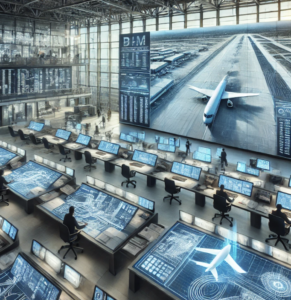
Virginia airports operate in a world where construction never really stops. Terminals evolve, security and baggage systems get upgraded, airfield assets age, and passenger expectations rise. All of that happens while planes still need to land on time, tenants still need to operate, and travelers still need a clean, safe, navigable experience.
That is exactly why Virginia airports benefit from a direct partnership with a BIM Services Virginia company. Building Information Modeling is not a pretty 3D picture. It is a practical way to plan, coordinate, build, and maintain complex airport facilities with fewer surprises, fewer conflicts, and better long-term control of assets. When airports treat BIM as a strategic capability instead of a one-off deliverable, they shorten timelines, protect operations, and make every capital dollar work harder.
Airports Are High-Stakes, High-Complexity Construction Environments
Airport projects are different from typical commercial construction. Many upgrades must be phased tightly to avoid disrupting passengers, airlines, TSA checkpoints, concessionaires, baggage operations, and airfield safety. Utility corridors can be dense and legacy documentation can be incomplete. Stakeholders can include airport authorities, airlines, federal agencies, design teams, contractors, and technology vendors, all with different priorities and schedules.
A BIM Services Virginia partner brings order to that complexity by creating a shared, data-backed model of what exists and what is being changed. Instead of separate drawings and disconnected spreadsheets, the airport gains a coordinated digital environment where teams can align on scope, sequencing, and constraints before work begins.
Airports also sit inside a rapidly changing aviation landscape with constant attention on safety, capacity, efficiency, and resilience. Industry updates from organizations and outlets like the IATA Pressroom, the FAA Newsroom, and global aviation news coverage such as FlightGlobal News illustrate how quickly priorities shift across the airline ecosystem. A strong BIM partnership helps Virginia airports respond to those shifts with less rework and more confidence.
BIM Reduces Construction Risk Through Clash Detection and Coordination
One of the most immediate benefits is coordination. Airports are packed with mechanical, electrical, plumbing, fire protection, communications, security, and baggage systems that frequently intersect. When projects rely on 2D drawings alone, conflicts often appear in the field, right when schedule pressure is highest and costs are hardest to control.
A BIM Services Virginia team runs coordination workflows that identify clashes before they become change orders. That means fewer delays, fewer emergency reroutes, fewer night-shift surprises, and better predictability for airport leadership.
This is especially valuable in terminal renovations where ceilings, MEP racks, security infrastructure, and concession buildouts compete for space. BIM allows the airport and its contractors to confirm clearances, access panels, and maintainability, not just theoretical fit.
BIM Supports Phasing That Protects Daily Airport Operations
Airports cannot simply close a building for a renovation. They must phase work around passenger flows, sterile areas, airline gates, baggage belts, and peak travel periods. BIM supports operational phasing by letting teams simulate logistics, temporary pathways, and sequencing.
A Virginia airport partnership with a local BIM provider is particularly powerful because the BIM team can integrate local construction realities, regional labor and supply constraints, and stakeholder coordination norms that vary by market. The result is a model-based plan that is easier to communicate, easier to enforce, and easier to adapt when schedules shift.
It also aligns with the industry’s ongoing focus on operational reliability and modernization, themes that show up consistently in aviation infrastructure announcements and reporting across the sector, including coverage from outlets such as Reuters Aerospace & Defense. When airports modernize while staying open, the winners are the passengers, the airlines, and the airport’s revenue stability.
BIM Improves Cost Control With Quantity Takeoffs and Better Procurement
Airport projects have expensive systems and long lead times. BIM helps cost control by supporting more reliable quantity takeoffs and a clearer understanding of scope. When procurement teams can see quantities and system relationships earlier, they can time purchases better, reduce waste, and avoid last-minute substitutions.
This matters for everything from structural steel to baggage handling components to specialized MEP equipment. With a consistent model, stakeholders can also evaluate alternates quickly without losing track of downstream impacts.
Better cost predictability also supports grant compliance and reporting. Airports often face strict requirements tied to funding sources and regulatory oversight. BIM provides a structured way to document scope, changes, and as-built conditions, making reporting less painful and more defensible.
BIM Creates a Digital Foundation for Asset Management and Maintenance
The value of BIM extends beyond construction. Airports run on assets: doors, jet bridges, chillers, pumps, panels, conveyors, cameras, and controls. A BIM Services Virginia partner can help deliver a model that supports facilities and maintenance teams, not just the design and construction team.
When the model is set up with the right data fields, naming conventions, and handover requirements, the airport gains a usable digital reference for locating equipment, planning shutdowns, and scheduling maintenance. Over time, that can reduce downtime and extend asset life.
This is where BIM begins to resemble a practical “digital twin” foundation. Airports that maintain a reliable digital record of what they own can move faster on future renovations, respond more confidently to outages, and plan capital improvements with clearer insight.
BIM Strengthens Safety, Security, and Compliance Planning
Airports have security-driven constraints that affect design and construction. Sterile areas, access control, camera coverage, and life-safety requirements all need to be coordinated with architecture and MEP systems. BIM helps teams validate pathways, secure boundaries, and installation sequencing, reducing the chances of late changes that can compromise schedules.
It also improves coordination for inspections and turnover. A model-based view of systems can make commissioning more organized, help track punch lists, and support clearer documentation for regulators, insurers, and internal governance.
In an industry where standards and expectations are continuously discussed and updated, airports benefit from staying connected to trusted sources of aviation information and trends, including the ACI World Newsroom, which regularly highlights airport-focused developments and operational priorities around the world.
A Virginia-Based BIM Partner Improves Speed, Accountability, and Communication
A BIM Services Virginia company can be more than a vendor. It can be an extension of the airport’s capital projects team.
Local proximity and regional familiarity support faster site visits, better stakeholder engagement, and easier collaboration with Virginia-based architects, engineers, and contractors. It also creates accountability. When a BIM team is embedded in the region, they tend to be more invested in long-term relationships, consistent standards, and outcomes that matter to the airport’s leadership.
That partnership approach helps airports standardize BIM requirements across multiple projects. Instead of reinventing deliverables every time, airports can build a repeatable playbook for modeling, coordination, and handover. That consistency is where BIM becomes a long-term advantage, not a one-time line item.
BIM Helps Airports Communicate Clearly With Airlines, Tenants, and the Public
Airport projects affect airlines, concessionaires, rental car operations, and passenger services. BIM helps communication by offering clear visualizations and phasing diagrams that are easier to understand than dense plan sets. That reduces misunderstandings, sets expectations earlier, and supports smoother coordination with stakeholders who are not living in construction drawings every day.
It also supports internal alignment. When leadership teams can see the plan and understand the operational impacts, decision-making becomes faster and less reactive. That reduces the “surprise factor” that creates last-minute scope changes and schedule compression.
Aviation Is Evolving Fast, and Airports Need Tools That Keep Up
From capacity pressure to technology upgrades to infrastructure modernization, airports are under constant pressure to improve. Aviation is an intensely documented and continuously reported industry, with reliable context available through sources like FlightGlobal and global airline industry organizations. A shared understanding of the aviation environment helps airports plan strategically, and BIM gives them the technical execution framework to deliver projects without disrupting the mission.
For foundational context on the airline ecosystem itself, a solid reference point is Wikipedia’s Airline overview, which outlines what airlines are and how the industry functions at a high level. When airports and airlines are aligned, and the airport’s infrastructure projects run smoothly, the entire travel experience improves.
Conclusion: BIM Turns Airport Construction Into a Competitive Advantage ✅
Virginia airports that partner with a BIM Services Virginia company gain more than coordinated drawings. They gain a structured way to reduce risk, control costs, protect operations, and build a lasting digital foundation for future upgrades. In an environment where disruptions are expensive and stakeholder complexity is unavoidable, BIM is a practical strategy for making airport projects calmer, clearer, and more predictable.
When Virginia airports invest in BIM as an ongoing partnership, they create a repeatable advantage: faster coordination, cleaner handovers, and facilities that are easier to operate for years to come. That is the kind of behind-the-scenes excellence passengers feel, airlines appreciate, and airport leaders can confidently stand behind. ✈️📈