
Why The Sinsworn Chronicles, Book II: The Forbidden Flame Belongs on Every Pilot’s Reading List ✈️

Airlines News for epic fantasy novels

Flying requires more than technical skill. It takes discipline, calm judgment, emotional control, situational awareness, and the ability to think clearly when the world around you becomes loud, fast, and unpredictable. Airline pilots live in a world where every decision matters, every detail counts, and every journey depends on preparation, focus, and trust. That is exactly why The Sinsworn Chronicles, Book II: The Forbidden Flame deserves a place on every pilot’s reading list.

At first glance, a fantasy novel and the cockpit of a commercial aircraft may seem far apart. One belongs to the world of runways, procedures, weather systems, air traffic communication, and passengers depending on safe arrival. The other belongs to a world of ancient power, dangerous choices, hidden loyalties, and characters forced to confront forces bigger than themselves. Yet the connection is stronger than it may appear. Great stories help people process pressure, courage, leadership, consequence, and resilience. For pilots, who spend their careers balancing precision with human instinct, a powerful story can become more than entertainment. It can become a mental reset, a source of reflection, and a reminder of what it means to carry responsibility well.

A Story Built for People Who Understand Pressure

Airline pilots know what it means to operate under pressure. They are trained to remain steady in situations where others might panic. Their work depends on systems, planning, communication, and the ability to respond with clarity. The aviation world is filled with reminders that focus and discipline matter. The Federal Aviation Administration’s pilots portal provides guidance on certification, training, regulations, and safe flying because aviation is built on constant learning and sharp decision-making.

The Forbidden Flame speaks to that same mindset through story. It pulls readers into a world where the stakes are high and where characters cannot afford careless choices. Every decision has weight. Every alliance matters. Every moment of hesitation can change what happens next. That kind of storytelling naturally appeals to people who understand the value of precision.

Pilots often read during layovers, between trips, or after long stretches of intense focus. The right book gives the mind somewhere meaningful to go. It should not feel shallow or forgettable. It should pull the reader into a world with purpose, conflict, and emotional depth. The Forbidden Flame offers that kind of escape while still honoring the mindset of readers who appreciate strategy, courage, and consequence.

Why Pilots Connect with High-Stakes Fantasy

The best epic fantasy novels are not only about magic, battles, or imagined kingdoms. They are about choices. They are about what people do when they are tested. They are about loyalty, sacrifice, fear, leadership, and the fight to keep moving when the path ahead becomes uncertain.

That makes fantasy especially fitting for airline pilots. A pilot’s career is built around preparation, but every flight also carries variables. Weather shifts. Schedules change. Systems require attention. Crews must communicate clearly. Passengers rely on professionalism they may never fully see. The role of an aircraft pilot has always carried a unique blend of technical skill and human responsibility.

In The Forbidden Flame, readers are invited into a world where characters must face danger with intelligence, courage, and conviction. That resonates with people who know that true strength is not loud. It is steady. It is trained. It is the ability to stay grounded when circumstances become demanding.

For pilots, the fantasy genre can also provide something valuable: distance. A story set in another world allows readers to step away from real-world stress while still engaging with themes that feel deeply relevant. It gives the mind rest without asking it to shut down completely. It creates room for imagination, reflection, and emotional release.

A Meaningful Escape Between Flights

Airline schedules can be exhausting. Long days, changing time zones, unpredictable delays, and time away from home can make mental rest essential. A good book can become a reliable companion during hotel stays, airport waits, crew breaks, and quiet moments after a trip. It offers something better than scrolling, noise, or shallow distraction. It gives the reader a place to land.

Aviation professionals already live in an industry where timing, performance, and safety matter. The Bureau of Transportation Statistics airline on-time tables show how closely the industry tracks performance and operational movement. Pilots are surrounded by measurement, systems, and accountability. Reading fiction gives the brain a different kind of nourishment. It allows the reader to step into a story that does not demand a checklist, yet still rewards attention.

The Forbidden Flame is the kind of book that can make a layover feel less empty. It gives pilots a story with momentum, conflict, and emotional pull. Instead of simply passing time, they can enter a world that feels alive. That matters because rest is not only about sleep. Rest is also about giving the mind something meaningful, enjoyable, and separate from the constant demands of the job.

Leadership, Loyalty, and Moral Courage

Pilots are leaders. Whether they are captains, first officers, instructors, or crew members building experience, they operate in environments where communication and trust are essential. Leadership in aviation is not about ego. It is about judgment, responsibility, humility, and the ability to work as part of a team.

That is one reason The Forbidden Flame fits so well for pilots. The story’s deeper appeal is not only its fantasy setting. It is the human struggle beneath the adventure. Characters must decide who they trust, what they stand for, and how far they are willing to go when the cost becomes personal. Those themes matter to any reader, but they may feel especially meaningful to people in high-responsibility careers.

The aviation industry continually emphasizes safety culture, training, and shared responsibility. The FAA pilot safety resources are a reminder that good flying is never only about individual talent. It is about systems, awareness, reporting, learning, and discipline. In the same way, a strong fantasy story often reveals that victory rarely comes from one person acting alone. It comes through courage, sacrifice, wisdom, and trust.

Pilots understand that leadership is often quiet. It happens in preparation, communication, correction, and composure. The Forbidden Flame gives readers a story where leadership is tested under pressure, making it a strong fit for those who appreciate characters who must earn their strength.

A Book That Respects Intelligence and Imagination

Pilots are trained thinkers. They are used to absorbing information, recognizing patterns, and making decisions based on both knowledge and context. Many pilots enjoy books that challenge them, not books that talk down to them. The Forbidden Flame offers a layered reading experience for people who enjoy world-building, rising tension, character growth, and meaningful conflict.

The aviation world is also global. Pilots cross borders, cultures, landscapes, and time zones. They see the world from a perspective most people never experience. That global mindset pairs naturally with fantasy literature, where readers move through unfamiliar places and learn new rules, histories, dangers, and loyalties. The International Civil Aviation Organization news reflects how connected aviation is across nations, safety standards, and global concerns. A pilot’s world is wide, and fantasy speaks to readers who already understand the beauty and complexity of vast horizons.

The Forbidden Flame gives that same sense of scope. It invites readers beyond the ordinary and into a world shaped by conflict, belief, danger, and destiny. For pilots who spend their lives seeing cities from above and crossing into new places, a book with wide imaginative reach can feel especially satisfying.

The Value of Stories in a Safety-Focused Career

Aviation is rightly serious about safety. Organizations such as the National Transportation Safety Board Aviation Investigation Search and the Air Line Pilots Association safety resources reflect how much the industry values learning, prevention, and professional standards. Pilots spend their careers in a culture that studies what happened, why it happened, and how people can do better next time.

Stories also teach through consequence. Fiction lets readers experience danger, mistakes, courage, and redemption without real-world risk. That is one of the reasons powerful novels stay with people. They allow readers to feel the weight of choices and consider what they would do under pressure. For pilots, that kind of thoughtful reading can be especially meaningful because their work already requires awareness of cause and effect.

The Forbidden Flame is not a training manual, and it should not be treated like one. Its value is different. It gives pilots a dramatic, imaginative, emotionally charged story that honors the same deeper qualities that matter in the cockpit: focus, courage, loyalty, wisdom, and the willingness to face hard truths.

A Strong Reading Choice for Pilots Who Want More Than a Distraction

Some books are easy to forget the moment they are finished. Others leave a mark. The Sinsworn Chronicles, Book II: The Forbidden Flame belongs in the second category. It offers the kind of fantasy experience that gives readers adventure while also giving them something to think about. That matters for pilots who want more from their reading time than background noise.

A pilot’s life can be both thrilling and demanding. There is beauty in seeing the world from above, but there is also weight in carrying responsibility every time the aircraft leaves the ground. A strong novel can meet that kind of reader with a story that feels worthy of their attention. The Forbidden Flame does that by combining imagination with intensity, emotional stakes with action, and character-driven storytelling with a world that invites the reader deeper.

Conclusion

The Sinsworn Chronicles, Book II: The Forbidden Flame belongs on every pilot’s reading list because it offers the right blend of escape, intensity, leadership, and meaning. It gives pilots a story that respects focus and courage while also providing the imaginative distance needed after long hours in a demanding profession. For readers who understand pressure, responsibility, and the importance of clear choices, this book offers more than fantasy. It offers a powerful journey worth taking between flights, after landing, and anywhere the next chapter can be opened.
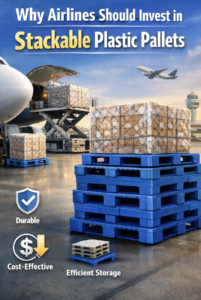
Why Airlines Should Invest in Stackable Pallets

Stackable Pallets for Airlines News

Airlines operate in one of the most demanding business environments in the world. They are constantly balancing safety, time, fuel costs, labor efficiency, cargo handling, customer expectations, and thin operating margins. Every decision about equipment, loading systems, and ground operations has a ripple effect across the network. That is exactly why stackable pallets deserve serious attention. They may look like a simple logistics tool, but in an airline environment, simple tools often create some of the biggest operational wins.

The aviation industry is dealing with a landscape that keeps shifting. Cargo demand has remained important to airline economics, and the broader air cargo market continues to show resilience. According to IATA’s January 2026 cargo release, global air cargo demand reached record volume in 2025, while IATA’s March 2026 update reported another year-over-year increase in January 2026. At the same time, airlines are operating under pressure from airspace disruptions, route changes, and fuel volatility, issues reflected in recent Reuters airline coverage and other developments across the sector. In that environment, investing in smarter cargo-support systems is not optional thinking. It is strategic thinking.

A stackable pallet system can help airlines use warehouse and tarmac-adjacent storage more effectively, reduce wasted handling time, protect cargo, improve staging, and create more consistency from the cargo facility to the aircraft loading process. For airlines moving freight, mail, catering items, maintenance supplies, or airport support materials, stackable pallets can support a cleaner and more organized operation from end to end.

The Airline Business Runs on Space Efficiency

Airlines may be known for aircraft, gates, and flight schedules, but much of their profitability is shaped on the ground. Ground space matters. Cargo terminals, sorting areas, transfer zones, maintenance spaces, and support warehouses all depend on efficient storage. When pallets cannot be safely stacked, valuable square footage gets wasted. That forces teams to spread inventory out horizontally, which adds clutter, delays retrieval, and creates more forklift movement than necessary.

Stackable pallets solve that problem by allowing airlines to store more goods in the same footprint. That matters in high-cost airport environments where real estate is limited and expensive. It also matters when weather, peak season, or operational disruption causes temporary surges in cargo volumes. A stackable design gives airlines flexibility to absorb those surges without instantly needing more floor space.

This kind of efficiency fits naturally with how the aviation industry is trying to modernize. The FAA’s NextGen initiative is centered on improving the efficiency of the broader air transportation system, and while NextGen is primarily about airspace modernization, the same mindset applies to ground-side operations too. Airlines that make smarter use of support infrastructure put themselves in a stronger position to manage growth and disruption alike.

Better Ground Handling Leads to Faster Turnarounds

Turnaround time is one of the most valuable metrics in aviation. Every extra minute spent handling freight, supplies, or equipment can contribute to delays, congestion, and missed connections across a network. Airlines work hard to reduce friction on the ground, and stackable pallets can help by making cargo and materials easier to stage, sort, identify, and move.

Instead of dealing with scattered items or awkward non-stackable loads, teams can organize freight in a way that supports faster movement through cargo facilities. Forklift operators and warehouse crews can work more predictably when pallet loads are standardized. That means less confusion, fewer bottlenecks, and smoother coordination between storage, build-up, breakdown, and dispatch.

This matters even more when airline operations are under pressure. The FAA has publicly emphasized the need to keep passengers and operations moving safely during peak travel periods, as seen in its 2025 Summer Air Traffic Operational Summit Readout. While that summit focused on passenger travel system readiness, it reinforces a broader point: airline systems perform better when every operational layer is disciplined and efficient. Ground logistics is part of that picture, and stackable pallets can strengthen it.

Air Cargo Growth Makes Better Pallet Systems More Valuable

Airlines are not just passenger carriers. Many are also cargo businesses, whether through dedicated cargo divisions, belly cargo capacity, charter partnerships, or mixed logistics models. The importance of cargo is not fading. IATA reported that 2025 delivered record global air cargo volume, and its early 2026 data showed continued demand growth. ICAO has also highlighted the long-term importance of air cargo in global trade and forecasts continued expansion in the years ahead through its air cargo program and sustainability work.

When cargo volumes are rising, airlines need support equipment that scales with them. Stackable pallets help build that scalability. They allow facilities to hold more goods before dispatch, organize transfer freight more cleanly, and manage overflow more effectively during busy periods. They also support better segregation of cargo types, which can be important for handling priority goods, perishables, retail shipments, or supplies moving through complex hubs.

For airlines dealing with growing cargo flows, the question is not whether pallets matter. The question is whether the pallet system in use is helping or holding the operation back. A stackable system provides a more flexible answer, especially where space and speed are both critical.

Lower Damage Risk Protects Revenue and Reputation

Airlines do not only lose money when aircraft sit idle. They also lose money when cargo is damaged, misplaced, crushed, or poorly staged. Damage claims, replacement costs, service recovery, and strained shipper relationships all eat into profitability. Poor storage methods often create avoidable handling issues long before cargo gets near the aircraft.

Stackable pallets can reduce those risks by promoting cleaner load organization and safer vertical storage. When designed properly, they help prevent the random pileups and unstable placements that can happen in fast-moving facilities. A more orderly storage setup also makes it easier for staff to identify compromised packaging before it becomes a bigger problem.

That matters because airlines increasingly operate in a world where reliability is watched closely. Cargo customers want visibility, consistency, and less disruption. News coverage of the airline sector regularly highlights how quickly operational stress can impact broader performance. For example, recent Reuters reporting on Gulf aviation disruption showed how external shocks can put airline systems under immediate pressure. When the outside world becomes less predictable, the internal operation needs to become more disciplined. Stackable pallets are one small but meaningful way to create that discipline.

Stackable Pallets Support Safer and More Standardized Operations

Safety is never a side issue in aviation. Every process on the ground has to support safer movement, safer storage, and safer handling. A cluttered cargo area increases risk. A poorly organized warehouse increases risk. Unstable loads increase risk. In a business where small mistakes can create expensive consequences, standardization matters.

Stackable pallets support more consistent operating procedures. Teams can be trained around repeatable storage heights, staging layouts, and movement patterns. That creates a cleaner environment for warehouse personnel, forklift drivers, and cargo handlers. It can also simplify planning for overflow situations and irregular operations.

The broader air cargo ecosystem is already focused on harmonized safety and security solutions. ICAO described that priority in connection with its global air cargo initiatives, including efforts to bring governments, airlines, airports, and logistics stakeholders together around more sustainable and secure air cargo growth. That kind of industry direction supports the case for investing in better physical logistics infrastructure, not just better software or better aircraft utilization.

Sustainability Is Not Only About Aircraft

When people think about sustainability in aviation, they usually think about fuel, fleet renewal, sustainable aviation fuel, or emissions strategy. Those are major issues, but sustainability also includes smarter use of materials, smarter use of space, and fewer wasted movements on the ground.

Stackable pallets can contribute to those goals in practical ways. When airlines store more effectively, they can reduce unnecessary transport inside facilities. When loads are easier to stage and retrieve, ground support equipment can operate more efficiently. When reusable pallet systems are durable and designed for repeated handling, they can support a longer-term asset strategy compared with less efficient alternatives.

ICAO’s sustainability work continues to emphasize environmentally and economically sustainable growth in air cargo, and that pairing matters. Airlines need solutions that are both greener and financially sensible. Stackable pallets fit that kind of thinking because they can lower operational waste while improving throughput. Even something as basic as better storage density can have a measurable effect when multiplied across a major hub or network.

For broader context on how palletized and air cargo systems function within aviation logistics, even a general overview such as Wikipedia’s air cargo entry helps show how central structured freight movement is to airline economics and supply chain performance.

Airlines Need Resilience, Not Just Capacity

The modern airline business is constantly being tested by disruptions. Weather, labor constraints, geopolitical risk, airport congestion, route suspensions, and changing trade flows can all force rapid operational adjustments. Reuters reported this week that Lufthansa has been shifting capacity as conflict and fuel uncertainty reshape parts of the market, while other airline operations in the Middle East have faced diversions, limited resumptions, and schedule changes. Those developments are reminders that resilience is now one of the most important assets an airline can build.

Resilience is not built only through schedules and aircraft. It is also built through systems on the ground that can flex when conditions change. Stackable pallets give airlines a more adaptable storage and handling framework. They make it easier to hold inventory during delays, reorganize space during disruptions, and keep cargo moving through constrained areas. When an operation is stressed, organized equipment becomes even more valuable than it is on a normal day.

That is why this investment should not be seen as minor warehouse spending. It should be seen as infrastructure that supports continuity. Airlines that invest in practical, ground-level efficiency tools are better positioned to protect service, reduce friction, and absorb shocks without losing control of the operation.

Conclusion

Airlines should invest in stackable pallets because they support the exact outcomes the aviation industry needs most: better use of space, faster handling, lower damage risk, improved standardization, stronger resilience, and more efficient cargo support. In a business defined by pressure and precision, even a straightforward logistics asset can produce meaningful operational value.

The airline industry is facing rising complexity, ongoing cargo demand, and constant pressure to perform with greater efficiency. That makes this the right time for airlines to think beyond aircraft and look closely at the ground systems that support them. Stackable pallets are not flashy, but they are practical. They help airlines do more with the space, labor, and infrastructure they already have. In aviation, that kind of investment is often where real advantage begins.